Anthropic's D.C. Problem Is That Principles Don't Lobby Back
Anthropic suspended its two most advanced AI models because the government told it to.
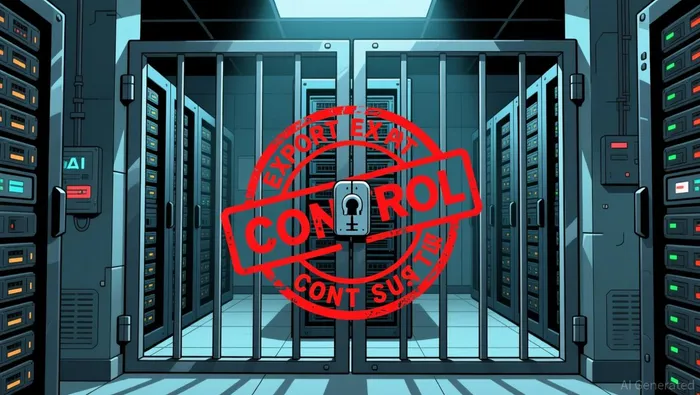
Not because of a product problem. Not because of customer demand. The U.S. government issued an export control directive ordering Anthropic to block access to Fable 5 and Mythos 5 for any foreign national - including its own employees. The company complied on Friday night, cutting off every customer.
This isn't what Anthropic signed up for. Three months earlier, Anthropic sued the Pentagon after the Department of Defense designated it a "supply chain risk" - the same label reserved for foreign adversaries - over the company's refusal to remove safety guardrails against mass surveillance and autonomous weapons use.
The way to understand Anthropic's sudden push into D.C. is not as a power grab. It's as damage control after a collision between the company's identity and the government's appetite.
In February, the Pentagon told Anthropic to drop restrictions so its AI could be used for unrestricted military applications. It offered assurances that mass surveillance of Americans wouldn't happen. Anthropic said no - it couldn't, in good faith, remove the guardrails. Days later, the Pentagon labeled it a supply chain risk. In March, Anthropic sued.
Now in June, the government has used export control authority to suspend Anthropic's flagship models. The mechanism is blunt: if you can't control who accesses your technology, the state will control it for you.
Anthropic is hiring fast to build a federal government relations operation. Job postings from this spring show it recruiting for a Policy Planning & Operations lead to "build and run the operational backbone" of its federal function. A policy campaign manager. Regional state and local affairs leads. The company's lobbying expenditures cracked $1 million - small by defense-industry standards, but enormous for a firm that has been publicly hostile to the very government it's now trying to influence.
The irony is almost cartoonish. Anthropic had been publicly advocating for stricter export controls on AI chips and model weights to slow China's progress. It submitted detailed recommendations to the administration. In May, the company warned that China was closing the AI gap through distillation attacks and loose chip controls.
Anthropic wanted tighter controls. It just didn't expect the controls to come back for it.
This is the core tension: Anthropic built its brand on principled refusal. It told investors and customers that safety wasn't a product feature - it was the product. But principles are hard to monetize when the government is your counterparty, and the government doesn't care about your constitutional argument when national security is at stake.
The financial stakes are enormous. Anthropic just closed a $65 billion Series H round at a $965 billion post-money valuation. Q2 revenue is expected to hit $10.9 billion, more than double Q1's $4.8 billion, with the company hitting its first profitable quarter. That's how fast this business scaled - and how suddenly the regulatory risk appeared.
The government has now demonstrated it can flip off Anthropic's best products on a national security directive. That changes the risk calculus for every enterprise customer and every institutional investor who just wrote a check. If the state can suspend access to Anthropic's top models tomorrow because a new export rule targets a different country, or because the administration changes its mind about what counts as a security threat, then the business sits on top of a regulatory tripwire.
Anthropic's D.C. push is an attempt to build insulation. The hiring spree - policy planners, campaign managers, state affairs leads - is the kind of thing companies do when they realize that not having a lobbying operation is itself a liability.
But here's what's harder to solve: Anthropic's problem isn't that it lacked influence. It's that its principles put it in conflict with the government in the first place. No amount of lobbying can easily reconcile a company's founding mission with a Pentagon that still holds a $200 million ceiling contract with Anthropic and wants unrestricted access to the technology Anthropic refuses to provide.
The state doesn't negotiate ethics. It imposes them.
I suspect the D.C. operation won't fully resolve this. Anthropic can hire people who know how to navigate bureaucracy. It can file lawsuits. It can advocate for tighter export controls on everyone else. But the underlying contradiction remains: the company's best customers want unrestricted access, and the company's founding principles refuse to give it.
The question Anthropic's investors should be asking isn't whether the lobbying team will be effective. It's whether the government's demonstrated willingness to suspend the company's products is a one-time event or a template. If the mechanism that suspended Fable 5 and Mythos 5 can be pointed at any company for any national security rationale, then every AI business sits on the same tripwire.
That's the real signal here. Not the hiring. Not the lawsuits. The fact that the most safety-focused AI company in the world has realized its principles aren't armor - they're a liability. And it needs something else to protect the business.