Kalshi's $1 Billion Clash With the Gaming Industry Just Went Criminal
Kalshi's Super Bowl volume put the regulatory fight on the map
Kalshi has turned a regulated prediction market into a high-stakes contest over where sports-adjacent wagering demand goes next: licensed sportsbooks or a federally supervised exchange.
More than $1 billion was bet through Kalshi during the Super Bowl, so this is no longer a niche policy dispute. It became a real-time legal question when Arizona filed the first criminal charges against the platform, raising the cost and visibility of the conflict for investors and operators alike.
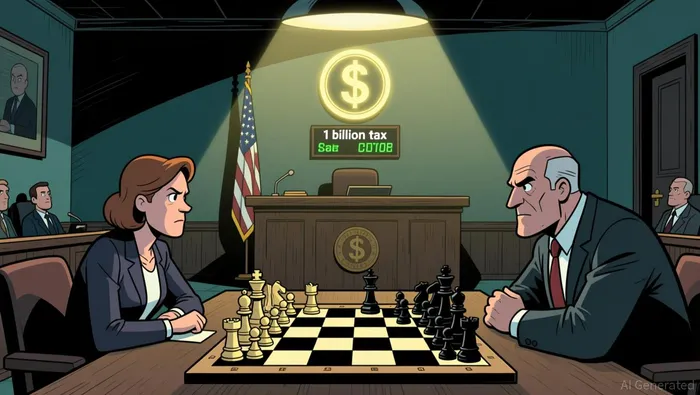
The debate only intensified after the AGA's lost-tax tracker crossed the same symbolic threshold. The association now says states have missed out on $1 billion in tax revenues because of prediction markets, while Kalshi and its backers have pushed back on that framing. That leaves a clear fault line: the AGA sees displaced tax base and consumer-protection risk, while bulls see incumbent pressure in a market still showing large user engagement.
Kalshi's regulatory posture sits at the center of that fight. The platform operates under federal regulation through the CFTC, even as it faces state-level criminal action and numerous lawsuits. If courts side with Kalshi, the model could gain clarity just as activity is proving broad enough to matter nationally. If states prevail, expansion could slow at a moment when demand appears increasingly mainstream.
The AGA's case is fiscal first, economic second
The commercial sports-betting numbers help explain why this dispute matters. In April, regulated sports betting produced $1.49 billion in revenue on $13.39 billion in handle, while regulated gaming as a whole generated $1.59 billion in tax revenue. That helps explain why the fight is about more than ideology: both sides are contesting a large, taxable wagering market.
The AGA's strongest point is not a precise accounting of net-new demand. It is that states may be steering consumer wagering dollars toward a channel that does not feed the same tax base. Its tracker has now passed the more than $1 billion in tax revenue mark, reinforcing the political case that where bets are placed can shape state budgets.
Kalshi's best argument rests on federal oversight
Kalshi's stronger counter is not that it creates perfectly substitute demand. It is that trading occurs under federal regulation through the CFTC, which shifts the debate from simple licensing rivalry to a broader question about federal oversight versus state enforcement. That matters even more now that Arizona filed the first criminal charges.
Proof remains the harder problem for both sides. David Forman pushed back on the idea that prediction markets simply displace sports-betting activity, saying cannibalization does not come into it at any point and that users overwhelmingly describe the activity as sports betting when it is framed neutrally. That does not resolve the fight, but it does show why direct cannibalization is difficult to prove cleanly.
Arizona shifted the case from policy debate to legal risk
The most important near-term repricing factor is legal, not operational. Arizona filed the first criminal charges against Kalshi, accusing it of running an unlicensed gambling operation. That raises the stakes beyond a routine regulatory spat: investors are now dealing with the question of whether federal authorization can actually shield the business from state enforcement.
That matters because Kalshi's case depends on whether federal commodities regulation can limit state-level barriers, while the broader battle already includes state regulators, tribal governments, and private plaintiffs. Civil suits can be narrowed or settled. Criminal charges make the timeline more urgent.
The controversy is still unresolved. Bulls can argue that Kalshi is a federally regulated prediction market operating in a sector that just saw strong April performance, which suggests demand is not the problem and access is. Bears can argue that if one state can move from objection to prosecution, near-term expansion deserves a lower valuation until courts define the boundary.
What would validate or weaken the thesis
Validation would come from court decisions or regulatory action that clarify whether federal oversight insulates prediction markets from state gambling enforcement. Pressure would return quickly if those legal challenges start to limit access, restrict new-market rollout, or force the business model into a narrower operating framework.