I Was Wrong About Warsh-Markets Are Underpricing the Inflation Shock Risk
I was wrong about Warsh-and markets may be repeating the same error
I dismissed Warsh as theater. I was wrong. With the next meeting on June 16-17 approaching, investors need to price a real possibility: that Warsh shifts how the Fed frames the debate.
Why influence matters more than formal control
This is no longer a hawk-vs-dove labeling exercise. A chair does not need unilateral power to move markets. He needs enough persuasion power to shape the committee's message, timing, and agenda. That is the live risk now: not a dictator in the chair, but a deliberate narrative setter arriving as inflation remains high and the outlook stays noisy because the AI boom and external shocks complicate the inflation path.
That distinction matters. Bears can still point out that other Fed officials are warning that higher rates may be needed. But if Warsh leans into a premature-easing narrative early, bulls may keep the short-term trading edge. Confirmation is not the end of the story. It is the point at which his framing starts landing on every forward statement, dissent, and market read-through.
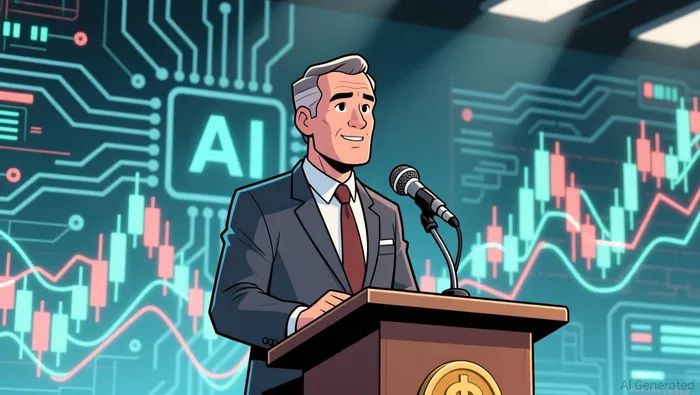
If Warsh wins the story first, the market can get rerated second.
The real mechanism is anchoring, not veto power
My old mistake was confusing influence with authority. Even if Warsh is one voice in a committee, that does not make his views harmless. A central banker can move markets without winning every vote, simply by planting an idea that colleagues, analysts, and investors start filtering in his favor.
Warsh's AI-cut argument is coherent, but still premature
Warsh's live pitch is straightforward: an AI-led productivity surge could be disinflationary enough to let the Fed cut sooner than the data alone implies. He has argued AI would soon deliver a productivity surge that would hold down prices, and the White House has echoed the idea that productivity can allow the Fed to lower interest rates. That is a powerful narrative hook.
The risk is not that Warsh can force policy. It is that he can anchor how policy is interpreted. If the chair starts framing guidance around AI's promised efficiency gains, investors may latch onto that lens. Every softer headline then looks like confirmation, while harder inflation prints are treated as temporary. The fair counterpoint is that Warsh is not making this case in a vacuum. His critique of the Fed's more than $6 trillion portfolio resonates with investors who already think the central bank has overreached. That makes the AI-productivity story easier to believe than a purely ideological hawk line.
The demand side of AI is easy to miss
The weakness in the Warsh case is not about committee math alone. It is that AI may not be purely disinflationary. It can also increase demand by spurring business investment and consumer spending. If that happens while markets are anchored to the cuts narrative, inflation-shock risk will be underpriced just as Warsh's framing starts to matter.
The data still do not support an early-cut narrative
That brings the debate from narrative to scoreboard.
Theory is not the same as current evidence
Warsh's case is not random market theater. If AI meaningfully lifts output without rekindling wage-led inflation, then productivity can allow the Fed to lower interest rates. That helps explain why the idea resonates with investors who already worry about central-bank overreach and who are receptive to his criticism of Fed bond-buying.
But plausible in theory and supported by current data are two different things. The live inflation picture still argues against an early-cut narrative: inflation jumped to 3.8% in April, and the Fed warned of spillovers into shipping, packaging, groceries, and fertilizer from energy-driven pressure. That is the behavioral trap. When investors meet a clean growth story against messy price data, they can too easily overweight future easing and underwrite present inflation persistence.
What the Fed is actually signaling
The real test is not whether Warsh can tell a compelling AI story. It is whether current evidence gives the committee cover to look through a rebound in inflation. Right now, it does not. Alberto Musalem warned the Fed may need to increase its policy rate if disinflation does not resume over the next six months. The scoreboard still shows caution, not an AI-enabled rush toward easier policy.
That keeps Warsh where he mostly is now: a framing risk, not yet the driver of the next policy step. He can shape how investors interpret the next few prints. But unless the committee's language shifts, his thesis remains a forward-looking hypothesis.
What would change the asymmetry
The bearish positioning still looks stronger unless the next meeting on June 16-17 changes the market's main assumption. The key watchpoints are:
- whether committee language starts looking through elevated inflation
- whether AI-driven productivity is treated as enough cover for earlier cuts
- whether officials explicitly separate long-run reform goals from near-term policy
Until that happens, Warsh matters because markets may believe him too early. He is a framing risk now, but becomes more consequential only if the meeting changes Fed language.