Western's New 1,000-B/D Permian Water Plant: Optionality or Locked-In Cash Flow?
JIP 2 is a proof point, but contracts still decide the story
A working plant is not the same as recurring revenue
JIP 2 is better understood as a proof point than as an earnings catalyst. The facility is a Joint Industry Project involving Chevron, ConocoPhillips, Devon, and ExxonMobil, and it is designed to receive 2,000 barrels per day of produced water and produce approximately 1,000 barrels per day of reclaimed freshwater. That is meaningful technical progress, but it does not yet show how much recurring, customer-contracted cash flow sits behind the project.
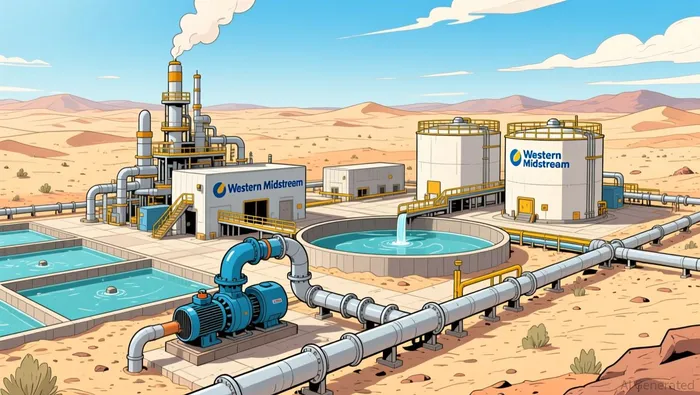
Why the pilot-to-contract distinction matters
That distinction matters because investors usually pay up when a pilot starts to look commercial, even if the revenue stream is still one step away. A pilot shows that the treatment process can work in the field. A contract shows that a customer is willing to commit demand and pay for the service over time.
Western has an operating base to build on
Western is not testing this idea from scratch. It already has water assets across the Delaware Basin, and the Aris acquisition was pitched as a way to create a more integrated system through a "one-stop shop". That gives JIP 2 a better launchpad than a standalone science project.
The basic bull case is straightforward: if the demonstration converts into signed reuse commitments, Western has a credible platform. The bear case is just as straightforward: without paid contracts, the project remains optionality rather than dependable cash flow.
Western's cash generation and existing water network lower the execution risk
The balance sheet can support a trial phase
The more useful question is not whether Western can build something novel, but whether it has the financial engine and customer hooks to turn that novelty into repeat revenue.
By that measure, Western has enough backing to be taken seriously. The company just posted record first-quarter Adjusted EBITDA of $683.1 million and first-quarter free cash flow of $242.3 million. It also expects 2026 total capital expenditures to range between $850.0 million and $1.00 billion. That does not mean the build is risk-free, but it does suggest Western can fund a trial phase without an immediate outside-capital crunch.
