First Industrial Realty's $250M Buyback and New Director: Why the Next Earnings Read Matters
First Industrial authorizes a $250 million buyback and appoints a capital markets director to signal strategic intent ahead of critical earnings verification.
The buyback and board change look deliberate
This week's moves look intentional rather than ceremonial. First Industrial didn't just put a $250 million repurchase authorization in place. It also added a director with capital markets experience and institutional relationships, while announcing a series of market tours for investors and analysts during 2026. Taken together, the signals suggest management wants to improve how the market values the company, how easily it can access capital, and how much visibility investors have before the next operating update.
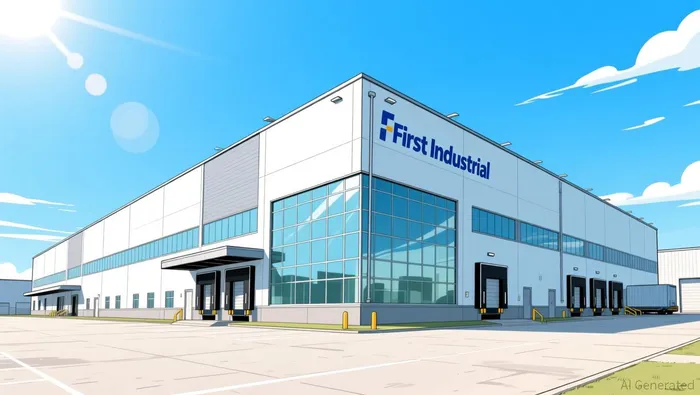
That interpretation is easier to make because First Industrial is not a small, narrow platform. It is a U.S.-only owner, operator, developer and acquirer of logistics properties with approximately 71.6 million square feet owned or under development across 15 target MSAs. That scale gives management more room to demonstrate that the portfolio, customer relationships, and development pipeline can still compound value.
The counterpoint is straightforward: a buyback and a stronger board presence do not, by themselves, fix a soft leasing story or weaker project returns. The next earnings update matters because investors still need evidence that repurchases reflect operating strength rather than substitute for it.
Capital allocation only works if operations keep delivering
Buybacks matter only when cash generation does too
The bigger question is not the headline repurchase size. It is what management is saying about the order of capital allocation. First Industrial has described the plan as a complimentary component of our disciplined capital allocation strategy. That framing matters: buybacks make the most sense when the business can keep generating cash from its existing asset base and still have surplus after preserving leases, maintaining inventory, and funding projects with acceptable returns.
Governance and experience strengthen the case
Governance also looks reasonable here. After Schmitz's appointment, six of seven directors will be independent. Leadership is hardly inexperienced either: Matthew Dominski has served as chairman since 2020, and Peter Baccile has been CEO since 2016. That does not guarantee better outcomes, but it does suggest a mature team making a capital-allocation decision rather than a new group finding its footing.
Why Frank Schmitz matters
Management specifically highlighted Schmitz's experience in capital formation, portfolio strategy, and investment trends, as well as his relationships across the institutional investor community. In a capital-intensive business, that background can help with both communication and financing. The key point is not publicity; it is whether those skills help the company fund development, acquisitions, and other projects more efficiently.
That leads to the hard question: can returns on development and acquisitions stay above the company's cost of capital? If they can, the buyback is a bonus on top of real growth. If they cannot, repurchases may start to look more like stock support than proof of a healthy operating engine.
Three things investors will likely watch on the next call
The next earnings read-through is the first real test. Investors already saw the $250 million repurchase authorization and the board changes. Now they need signs that the underlying business is still performing cleanly.
Watch 1: Is the buyback truly discretionary?
A repurchase authorization is only meaningful if it reflects flexibility. Investors should listen for signs that timing and sizing depend on price, market conditions, and competing uses of capital rather than on a need to create artificial demand for the stock.
Watch 2: Does "fully integrated" still support higher-quality growth?
First Industrial describes itself as a fully integrated owner, operator, developer and acquirer. If that model is working, management should be able to show how leasing activity, development absorption, and acquisitions reinforce each other and help protect margins. - Positive sign: management connects operations, development, and acquisitions in one coherent answer. - Warning sign: "Integrated" becomes jargon because development slows, renewals weaken, or acquisitions dilute returns.
Watch 3: Does the Q1 2026 update leave room for judgment?
The Q1 2026 results call is the checkpoint. Investors do not need flawless guidance. They need enough detail to judge whether cash flow is still funding growth from within the platform.
A clear invalidation signal would be management emphasizing the repurchase window more than operating execution, or leaning on "integrated platform" language without showing how it protects returns.
The setup works best as a quality-compounder story
From here, the stock reads better as a quality-compounder setup than as a momentum trade. A U.S.-only owner, operator, developer and acquirer of logistics properties with a broad portfolio should have room to outperform if investors reward steady execution over aggressive expansion. The buyback and investor outreach matter because they can amplify that core story.
What would help the stock
- The integrated model shows up in answers, not just pitch-deck language. If management connects operations, development, and acquisitions clearly, the market may be more willing to reward consistency.
- Buybacks remain opportunistic. Repurchases look strongest when they appear to be a secondary use of cash rather than the main event.
- Investor outreach improves trust. More visibility can help narrow the discount if management stays consistent across calls and tours.
What could stall it
- Narrative outruns operating proof. That is the main risk.
- Capital access improves, but discipline does not. If financing becomes easier while project returns weaken, the market is likely to shift from rewarding the story to questioning capital deployment.