Russia Hit Kyiv Hours After G7-Why This Escalation Could Reset Ukraine Backing
Kyiv strike timing kept diplomatic pressure on the G7
Kyiv was hit hours after Zelenskiy spoke with Trump and European leaders at the G7, and authorities immediately told residents to take shelter. The timing does not prove Moscow ordered the attack to send a message, but it does place the strike at the center of the summit's diplomacy.
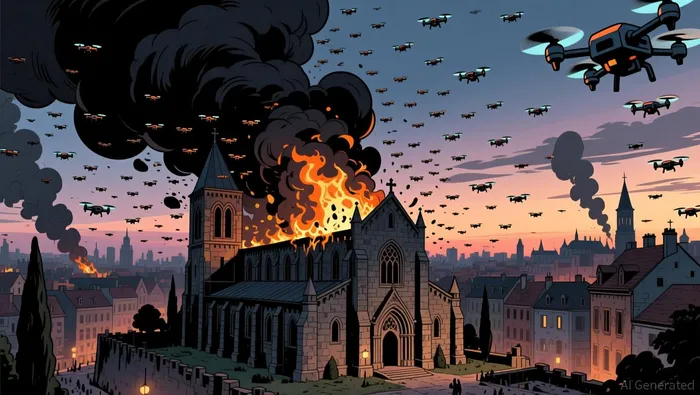
The escalation also followed an even deadlier wave earlier this month. Hours before the G7 started, Russia fired hundreds of drones and dozens of missiles in a barrage that killed 11 people and set fire to a religious landmark. That earlier attack also damaged the 1,000-year-old monastery, according to local reports. The back-to-back strikes show how quickly battlefield exhaustion can sit alongside diplomatic outreach.
Why the debate has shifted
Trump said he had a "very good" meeting with Zelensky, and European leaders left the summit in a more constructive mood. That makes the timing of Russia's attacks more politically significant, not less. If negotiations are being discussed while major cities are still under threat, the debate shifts toward how much pressure Ukraine still needs.
Analysts arguing that premature negotiations risk converting Russia's strategic erosion into a political gain are making a timely case. The latest strikes support the view that a fast peace push could reward violence rather than settle it.
Ukraine and Russia are trading deeper strikes as costs rise
The strike map is widening
Russia said it hit Ukrainian military sites across seven Ukrainian regions using hypersonic missiles and drones. Kyiv's account points to a similar deep-strike pattern from Ukraine's side. Zelensky said Ukraine struck the St. Petersburg oil terminal, military targets at the Kronstadt base, and an enterprise involved in the production of Russian weapons in the Tambov Oblast.
That points to a broader effort to hit fuel, logistics, and defense-related targets far behind the front line, rather than focus only on frontline fighting.
Why this looks like a cost-imposition campaign
Analysts say Ukraine's strike strategy has got smarter in 2026. The message from these attacks is not random terror; it is selective pressure on assets that matter to Russia's war effort.
That fits the wider attrition dynamic. Russia still has the reach to inflict serious damage on Ukraine, but Ukraine is increasingly reaching back toward nodes that can raise repair costs, disrupt distribution, and challenge the sense that large parts of Russia are safe. At the same time, analysts argue Russia is already dealing with rising fiscal pressure, inflation, and structural imbalances linked to continuous military spending.
The practical takeaway is straightforward: near-term Russian withdrawal still looks unlikely, but the economic and strategic costs of continuing the war are mounting for Moscow as well.
Gas markets now face tighter margins, not an obvious new supply shock
For markets, the main question is less about a fresh Hormuz-style supply shock and more about how Europe handles tighter conditions and tougher policy signals.
Europe has already shown resilience
Even after Hormuz briefly blocked nearly 20% of global LNG trade, suppliers from the U.S., Algeria, and Nigeria helped plug the gap, and Europe's gas market absorbed the shock. That does not mean the system is stress-free, but it does show the market can handle serious disruption better than in 2022.
The real risk is thin buffers plus political pressure
European gas stocks are just above 35%, well below the seasonal norm of around 50%, while winter power contracts carry a premium of more than 20% versus next year. That backwardation shows markets are already pricing winter fragility.
The Ukraine war is also reinforcing Europe's push to distance itself from Russian energy. Leaders at the G7 urged Trump to strengthen sanctions on Russia, and analysts argue marginal LNG is increasingly likely to come from the U.S. as Europe moves further away from Russian gas.
What would change the read-through
If sanctions tighten and supplemental LNG arrives smoothly, the policy-risk premium in gas and power can cool. If deeper strikes worsen the security picture without improving Europe's supply position, that fragility is more likely to stay in pricing.