Japan's BOJ Coordination Message Just Raised the Odds of Higher Rates, a Firmer Yen, and More Stock Market Pressure
Kihara's coordination message matters more than the hike itself
The market already expected the BOJ to raise rates. What changed the tone was Tokyo's public framing of that move.
Earlier this month, the government said it expects the BOJ to guide policy toward a sustainable 2% inflation target in close coordination with the government. At the same time, Chief Cabinet Secretary Minoru Kihara said specific methods of monetary policy should be left to the BOJ. The message was coordination on the goal, not direction on the tools.
That matters because it reduces one familiar excuse for delay. If the government and the central bank are aligned on the end point, further tightening is easier for markets to read as a process rather than a surprise.
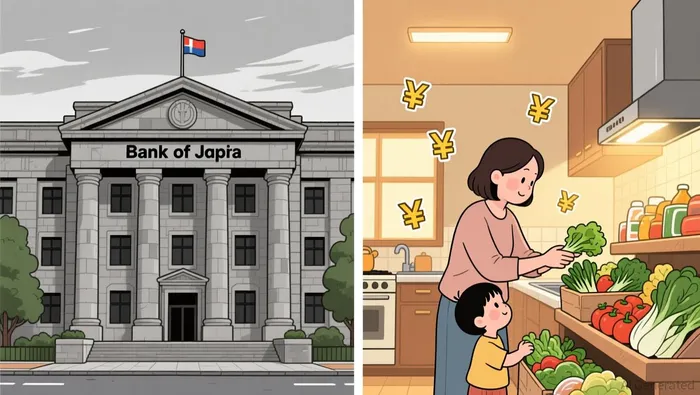
Why the signal can drive a faster rerating
Tuesday's decision took the policy rate to 1%, a 31-year high, in a widely expected move. The immediate hike may have been priced, but the coordination message is harder to dismiss. Investors begin to price not just one rate increase, but a firmer funding-cost regime.
Higher yields usually support the yen and can weigh on rate-sensitive equities. The strategic risk is waiting for full confirmation until the rerating is already underway.
Household income is improving, but the BOJ still needs durable support
The next question is whether Japan has enough domestic support for further tightening, or whether the BOJ is still dealing mainly with imported inflation.
Real wages have improved for four straight months
In April, real wages climbed 1.9%, marking a fourth consecutive monthly gain. That matters because real wages show what households can spend after inflation, rather than just reflecting sticker-price changes.
The broader wage data point in the same direction. Nominal wages rose 3.5%, base pay grew 3.4% for a fourth straight month, overtime pay increased 4.2%, and special payments such as bonuses jumped 7.4%. For the BOJ, that combination suggests household purchasing power is no longer moving entirely against inflation.
The bank has said steady wage and price dynamics are a prerequisite for tighter policy. It has also said it will watch how currency moves could affect the likelihood of achieving our growth and price forecasts. That means the BOJ can tolerate imported inflation for a while, but it is more likely to tighten when households have more room to absorb higher prices.
Pass-through is still tied to energy, and that keeps the debate alive
The BOJ said price pass-through from crude has been progressing at a relatively fast pace in business-to-business transactions and could spread more broadly into consumer prices. That supports the case for caution, but it does not settle the bigger question.
Bulls can argue this is a healthier cycle: wages rise, firms pass through costs, and demand stays intact. Bears can argue it is still energy-led inflation in better clothing, with subsidies still helping cushion households. The key test is whether wage growth becomes the engine of inflation rather than just its cover story.
What would confirm a stronger yen and tighter policy path
The baseline view is to lean into normalization, stay selective on equities, and let the yen be the main signal.
Confirmation signals
- Policy follow-through: Another move higher from the 1% policy rate would be the clearest signal. With the government expecting policy aimed at a sustainable 2% inflation target, each additional hike would show coordination is becoming more than rhetoric.
- Wage momentum that reaches the wallet: Recent data already show real wages climbed 1.9% in April, helped by special payments that jumped 7.4%. If upcoming annual wage negotiations keep that momentum going, the case for higher rates strengthens.
- Broader inflation pressure: If pass-through moves beyond business-to-business transactions and into wider consumer prices, markets will have to reprice Japan as a higher-yield, firmer-yen environment.
How to think about Japanese equities
This is not a blanket long-Japan call. A stronger yen and higher funding costs help some businesses and hurt others.
- Prefer: companies with pricing power, domestic demand exposure, and balance sheets that can handle a better wage environment.
- Be cautious with: import-heavy models, highly leveraged names, and exporters that could see margins compressed if the yen strengthens quickly.
- Watch the BOJ's internal debate: The decision was made by a 7-1 vote, which shows commitment but not an absence of caution.
What would weaken the setup
- Energy tensions ease sharply after the market views the two-week ceasefire between the U.S. and Iran as a durable de-escalation.
- Inflation falls faster than wages. Consumer inflation eased to 1.5% in April; if that trend accelerates before wage gains fully take over, the yen loses some of its edge.
- Wage demands fail to translate into actual pay settlements. Rengo is seeking wage hikes of 5% or more in 2026, but the macro and market impact depends on what firms ultimately agree to.
What to watch next: base pay, wage talks, and whether energy relief fades first
With Tokyo signaling close coordination toward a sustainable 2% inflation target, the more useful assumption is that the BOJ keeps pressure on until wage growth looks durable.
Short watchlist
- Paycheck quality: bonus and overtime are helping, but base pay strength is the cleaner signal that households can absorb higher borrowing costs without the economy stalling.
- The spring wage round: investors do not need a full verdict yet; early signs from annual wage talks can be enough to keep the tightening trade alive.
- Inflation breadth: if pass-through moves beyond business-to-business transactions and into broader consumer prices, the yen and rate-hike odds likely get another lift.
The inflation trap
The main risk is confusing an oil-shock cooldown with a structural calming of the economy. If the Middle East ceasefire reduces energy pressure faster than wages take over, inflation can fall even if the underlying wage-price cycle still has room to run.
The practical rule of thumb is simple: trust durable pay growth more than temporary energy relief.