Black Tuesday For The AI Trade: Korea Crashes, Nasdaq Futures Sink
A sharp global tech selloff triggered by Nvidia pricing concerns and Korean tax fears challenges AI valuations, signaling a potential end to the market's automatic buying opportunities.
The AI trade had survived expensive valuations, crowded positioning and higher bond yields for months. On Tuesday, all three finally mattered at the same time.
Global markets were hit by a sharp technology selloff, with South Korea becoming the epicenter. The KOSPI plunged nearly 10%, while chip heavyweights Samsung Electronics and SK Hynix suffered double-digit declines.
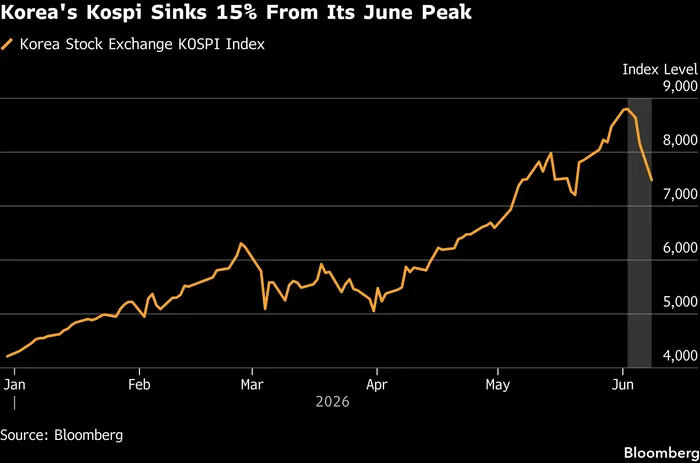
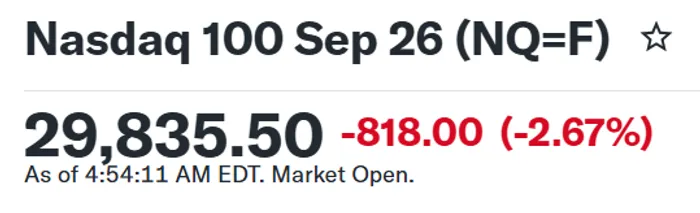
The pressure quickly spread into US futures. Nasdaq 100 futures led the decline, falling more than 2% in early trading, while S&P 500 futures dropped more than 1%. The message from the market was simple: this was no longer a local Korean selloff. It was a broader warning about the AI trade.
The AI Rally Finally Hit A Wall
The damage was most severe in markets that had benefited the most from the AI boom.
South Korea had become one of the world’s hottest AI-linked markets this year, driven by the explosive rally in memory-chip leaders. SK Hynix’s rise was especially dramatic, powered by demand for high-bandwidth memory used in AI servers. That same concentration made the market vulnerable when sentiment turned.
The selloff also came after a weak US session for Big Tech. According to FT, the Nasdaq Composite has fallen about 3% in June, reversing part of the gains from the previous two months, when investors rushed into AI-related stocks. Alphabet, Amazon and Broadcom all came under pressure, and SpaceX’s sharp post-IPO reversal added to the sense that speculative technology trades were losing momentum.
This matters because the AI rally has increasingly depended on a narrow set of assumptions: hyperscalers will keep spending aggressively, chip demand will stay tight, pricing power will hold, and higher rates will not be enough to break valuations.
Tuesday challenged all of those assumptions at once.
Two Triggers: Nvidia Pricing And Korea’s Tax Scare
The first trigger came from alternative data around Nvidia’s flagship AI chips.
Prediction-market activity on Kalshi shows traders betting that Nvidia’s B200 computing-rental price will struggle to return to its late-May high before the end of the second quarter. According to Ornn data, B200 rental prices rose to $6.11 per hour on May 30, then fell to $4.22 by June 21, a drop of more than 30%.
That does not mean Nvidia’s long-term demand story is broken. But it does raise a harder question for investors: if AI computing supply is becoming less tight, can Nvidia maintain the same pricing power that helped justify its premium valuation?
The concern is especially sensitive because Nvidia has recently lagged the broader semiconductor trade. While memory-chip names rallied strongly, Nvidia’s shares have underperformed the semiconductor ETF over the past month. Investors are no longer treating every AI chip company as the same trade.
The second trigger came from South Korea.
Reports that lawmakers discussed including unrealized gains on stocks and real estate in a broader tax framework sparked fears of a major policy shift. The idea is still at the discussion stage and may eventually include deferrals or limited application to high-net-worth investors. But for a market already sitting on huge paper gains, even the possibility of taxing unrealized gains was enough to trigger forced selling and panic.
The timing was brutal. Korean regulators had already warned about overheating in leveraged ETFs tied to Samsung Electronics and SK Hynix. With AI stocks crowded, retail participation high and leverage elevated, the tax headline landed in a fragile market.
FT Analysts: The Problem Is Bigger Than One Headline
The FT’s analyst takeaway is that this selloff is not just about Korea or one Nvidia pricing signal. It is about a market where the margin for error has become very thin.
Barclays’ Venu Krishna warned that new risks are emerging as markets face renewed inflation pressure, unprecedented AI capital spending and a narrower Fed policy path. In other words, investors are being asked to pay very high valuations at the same time that rates may stay higher and AI spending requirements are becoming harder to ignore.
BNY strategist Geoffrey Yu made a similar point: once expectations for the Fed shift more hawkish, the hurdle for risky assets rises. That is especially painful for long-duration growth stocks, where much of the value depends on future profits.
RBC BlueBay’s Mike Bell focused on positioning. Tech stocks have already rallied sharply, and when a trade becomes crowded with leverage and retail money, it does not take a major shock to create a violent pullback.
That may be the cleanest explanation for Tuesday’s move. The market did not suddenly discover that AI demand exists. It began questioning whether investors had already paid too much for it.
The next test will be earnings, especially from memory and AI infrastructure companies. Strong results could stabilize the trade by proving that demand remains real. But if margins, pricing or capex guidance disappoint, Tuesday’s selloff may look less like a one-day accident and more like the first serious valuation reset of the AI cycle.
For now, the AI trade is not dead. But it has lost its most powerful advantage: the belief that every dip is automatically a buying opportunity.