The AI-Frenzy-Led Chip Boom Is Becoming Detrimental to the Market, and Bubble-Burst Pain May Come Soon
AI has enjoyed explosive prosperity since the debut of ChatGPT, with a new industrial revolution reaching nearly every corner of the world and creating several trillion dollars in market value within just a few years. But as the boom becomes more frenzied, the story is starting to look increasingly out of control. The aggressive expansion of data centers is beginning to act like a heavy tax on the traditional economy. In the past, higher capital spending meant stronger confidence in AI and better earnings visibility for semiconductor companies. That remains true to some extent. However, when hyper-spending becomes unsustainable, chip stocks' extraordinary pricing power starts to create a worse price-to-reward setup. Every component price increase eventually hits the broader economy and the supply chain. We may now be closer to a small bubble burst than ever, with real pain potentially coming soon.
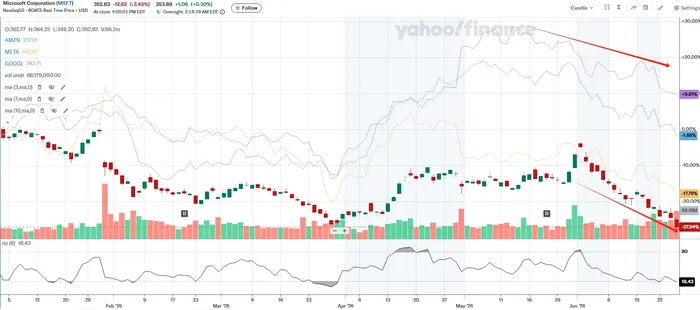
The clearest issue is that hyperscaler capital spending has become too large for even mega-cap technology companies to fund comfortably. The big four hyperscalers could push capex above $700 billion this year, yet they do not have enough internal cash flow to support this race without outside financing. They are rushing to build data centers because none of them wants to fall behind. To accomplish that, Alphabet has raised $141 billion through debt and equity offerings since October, Meta has raised more than $80 billion over the same period, and Amazon has raised around $80 billion this year. The point is simple: tech giants are running out of cash to build AI infrastructure. This looks manageable when earnings are strong and stocks keep rising. But once investors become alarmed by high capex, limited monetization, and falling share prices, these companies may face a much harsher reality and be forced to reevaluate their spending plans.
On the other side of the trade, chip stocks are absorbing almost every dollar hyperscalers raise. Micron's earnings may be a bigger warning for the world than they first appear. The memory-chip company achieved roughly quadruple revenue to $41 billion in its fiscal third quarter compared with the same period a year ago. But the more worrying point is its 85% gross margin, which is even higher than Nvidia's 75% and far above Micron's own 39% level from the prior year. The company also expects gross margin to reach 86% in the coming quarter. These are amazing numbers for semiconductor investors, but they also show that buyers are paying a much higher price to chase the same AI dream. When suppliers capture this much margin, customers' price-to-reward ratio becomes significantly worse.
Micron is especially important because memory is not only an AI input, while Nvidia can be viewed more as a pure AI infrastructure player. DRAM and storage are used across PCs, smartphones, autos, industrial electronics, gaming devices, servers, and consumer hardware. In the past, data center cycles and consumer electronics cycles were more separate, so a cloud spending boom did not immediately become a pricing shock for the entire hardware economy. Now AI data centers are monopolizing the same memory supply that the old technology economy still needs. That is not a healthy sign. If the AI buildout gives memory makers software-like margins, the cost pressure will not stay inside the data center. It will spread through the entire electronics chain.
Apple's price hikes are the first major proof. The company has begun raising prices on Macs and iPads by roughly 15% to 25%, citing soaring memory and storage costs caused by AI data center demand. The iPhone has not yet been hit in this round, but that may only be a matter of timing, and it could matter even more for the consumer side. If Apple needs to lift prices across all categories because input costs are surging, other manufacturers will likely suffer even more pressure. Investors may have to admit that the AI boom is no longer only creating productivity potential. It is also creating hardware inflation, which could become a nightmare for broader fundamentals.
That makes the current market setup more fragile. Investors are paying high multiples for chip stocks because they expect explosive earnings growth to continue. But the same profit expansion is built on hyperscalers spending more, paying more, and accepting lower near-term free cash flow. This circular logic can work only as long as capital remains patient, but the environment may become less forgiving as new uncertainty rises. Cloud providers may eventually realize that aggressive spending is not wise when they are paying more for the same amount of equipment. Any sign of slower infrastructure investment during Q2 earnings could matter far more than usual. Investors may begin to question whether the current AI race is sustainable, and that could trigger selling pressure in semiconductor leaders. Since chip stocks are now at the center of the equity market, the domino effect could quickly drag the broader index lower.
That said, if hyperscalers begin to signal that spending will become more disciplined, that they need time to digest capacity, or that returns must improve before the next investment round, earnings expectations for chip stocks could reset quickly. The deeper risk is that AI spending becomes self-defeating. Higher chip prices improve supplier earnings, but they also reduce the economic return for data center buyers. Rising infrastructure costs force hyperscalers to issue debt, sell equity, reduce buybacks, or accept weaker cash conversion, ultimately leading to weaker stock performance.
At the same time, elevated memory prices are already spilling into consumer electronics, forcing companies such as Apple to raise prices. That can weaken demand in the old economy. Consumer-facing companies may see less interest as prices move higher, which could eventually hurt memory demand as well. That is how the trade can turn into a double-loss game and create a possible death spiral. In a crowded market, slower acceleration can be almost as damaging as outright weakness. Eventually, investors may realize that AI has not only created a growth boom. It has also created a cost shock.
In conclusion, the AI-frenzy-led chip boom is becoming detrimental to the broader market because it is pulling too much cash flow toward suppliers while leaving hyperscalers with rising capex, weaker financial flexibility, and still-uncertain monetization. Micron's 85% gross margin and robust guidance may look bullish on the surface, but they also show how expensive the AI race has become and how broad the impact could be. If the next earnings season reveals slower spending plans or more financing pressure, the chip trade could face a painful valuation reset. That is how bubble-like stories usually become vulnerable: not when the theme turns fake, but when the price of participating in the theme becomes too high.