A trilemma with no easy exit
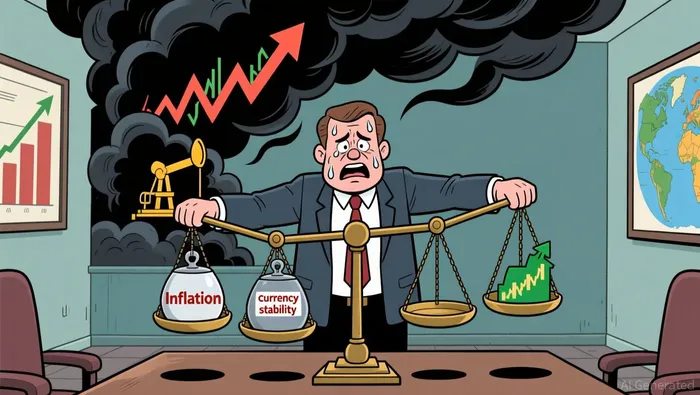
THE STATE BANK of Vietnam is trying to hit three targets with a single pair of reins. That is not a description of bad management. It is the classic predicament of a small, open economy whose growth depends on cheap credit, whose exporters care about the currency and whose people care about bread.
The problem is that the three goals are pulling in different directions. In January the central bank set an inflation target of 4.5% for 2026 and cut its credit-growth target to 15%, down from a more generous pace earlier in the decade. That was a sensible move to cool asset-price froth. But then the war in Iran erupted. American and Israeli strikes in late February sent crude-oil prices surging by about 50%, as Al Jazeera reported at the time. For Vietnam, a net importer of energy, the shock hit on both sides of the macroeconomic balance sheet. Imported inflation rose; the cost of servicing a growth model built on investment and exports increased.
The central bank's response has been a mixture of resolve and improvisation. Governor Pham Duc An insisted in May that the 4.5% inflation target would stand, even as oil-fed price pressures mounted. In April the bank signalled it was prepared to intervene in the foreign-exchange market to support the dong. It has also kept its policy rate unchanged at 3%, while the governor pushed in mid-April for further cuts to support growth. The result is a policy stance that is simultaneously hawkish on inflation, cautious on the currency and dovish on lending. Such triangulation can work when external conditions are benign. They are not.
The dong tells the story most plainly. It is trading at around 26,300 to the dollar, close to its all-time high. A year ago, UOB, a Singaporean bank, was forecasting a path towards 25,800; the currency has already broken that projection. The central bank has foreign-exchange reserves of more than $100bn, which gives it ammunition to defend the exchange rate. But FX reserves are a stock, not a flow. Every intervention drains reserves and pushes up the domestic money supply, which in turn feeds the inflation the bank is trying to contain. The mechanics are unforgiving: defend the currency and you risk prices; defend prices and you risk the currency. Raise rates to do both and you risk growth.
To be sure, Vietnam is not alone in facing this bind. The IMF expects global inflation to rise to around 4.4% in 2026, above the level recorded in 2025. The OECD has warned that higher energy prices from the Iran conflict will slow growth and keep inflation elevated through 2027. Larger economies have more tools: fiscal space, deeper capital markets, the privilege of a reserve currency. Vietnam has relatively few. Its monetary framework, unlike that of many ASEAN peers, does not rely on a single inflation-targeting rate. It manages a broader set of macro-financial objectives at once, which gives the central bank flexibility but also blurs accountability when trade-offs become painful.
The deeper question is not whether the dong will weaken further or whether inflation will overshoot the 4.5% target. Both are likely to some degree. The deeper question is whether Vietnam's macro-policy apparatus is built for the kind of external shock that is now looking less like an aberration than a feature of the global economy. Oil spikes, supply-chain disruption and geopolitical risk have become more frequent. A monetary framework that assumes stability is ill-equipped for a world that delivers the opposite.
The first task is to acknowledge the trilemma openly. The central bank cannot credibly promise 4.5% inflation, a stable dong and robust credit growth all at once in the face of a large external shock. It should decide which goal takes priority and adjust the others accordingly. If growth is paramount, as the push for lower rates suggests, then let the currency absorb more of the adjustment and widen the inflation band. If price stability is the anchor, keep rates steady and accept that the dong and credit growth will take a hit. Pick two; stop pretending you can have three.
The second task is structural. Vietnam should move towards a clearer inflation-targeting framework, with a single policy rate that markets can price. That would not eliminate trade-offs, but it would make them visible. Investors would know which objective the central bank was optimising for. Policymakers would find it harder to use monetary policy for multiple purposes, which is often a polite way of describing ad hoc bail-outs and credit steering.
Finally, the government should complement monetary prudence with fiscal discipline. The proposal in April to create a state-backed stabilisation fund for the stock market is well-intentioned but risks the wrong message: that the authorities will cushion every fallout. That is a recipe for moral hazard, not stability. Better to use targeted fiscal support where it matters most - energy subsidies for low-income households, for instance - rather than blanket interventions that confuse markets and strain the budget.
The Iran war is not a permanent condition. Oil prices may normalise, the dong may strengthen and inflation may ease. Until then, the central bank should resist the temptation to fight yesterday's target with today's tools. Clarity about priorities is the only policy that works in a crisis.