The chair who talks too much
INFLATION RISKS have come down. So said Kevin Warsh, the Federal Reserve's chairman, on Wednesday at the European Central Bank's annual forum in Sintra. The bond market, which had been braced for an inflation hawk who might raise interest rates before he cuts them, exhaled. Treasury yields, which had spiked after Mr Warsh's first press conference as Fed chair, retreated once more.
The headline-grabbing phrase is not what it seems. Mr Warsh did not say inflation was under control. He repeated, as he has done since taking the helm from Jerome Powell in May, that inflation remains too high. What he signalled was that near-term inflation expectations had softened over the past four weeks. That is not a pivot. It is the correction of a positioning error.
Mr Warsh arrived at the Fed with a reputation as a hawk who distrusts the central bank's tendency to talk down markets. In his first meeting of the Federal Open Market Committee in June, he kept the benchmark rate steady at 3.5% to 3.75%, as widely expected. But the Fed's updated outlook raised its inflation forecast for the end of 2026 to 3.6%, up sharply from 2.7%, according to Reuters. In his press conference afterwards, Mr Warsh emphasised that inflation had been running well ahead of the 2% target for more than a year, and suggested that officials should speak less and drop forward guidance about the direction of rates.
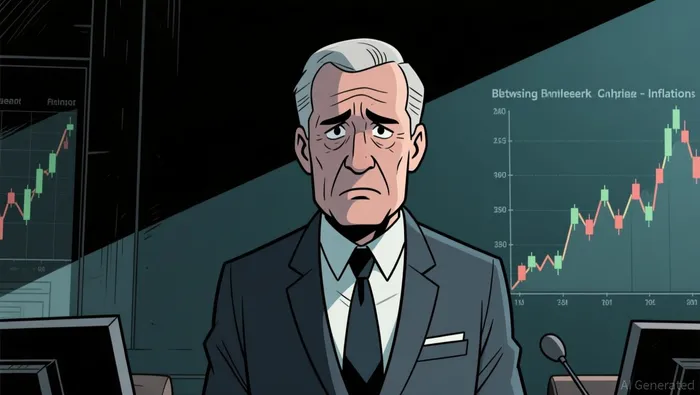
The market took this as a declaration of war on inflation. The yield on the two-year Treasury note, which is sensitive to near-term rate expectations, jumped. The ten-year yield pushed towards 4.5%. Some analysts concluded that Mr Warsh's first move would be a hike rather than a cut. Bank of America went further, predicting that the Fed would "bring down the hammer" with a series of rate hikes this year, reversing earlier easing.
To be sure, the data that the market is pricing in is real. Inflation is above target and showing little sign of surrendering. The Fed's own forecast acknowledges that the path back to 2% will be slower than it once hoped. And there is a case that after months of cutting, the committee should not signal further easing before the job is done.
But the problem is not that the market was wrong to price in hawkishness. It is that Mr Warsh's rhetorical escalation created the need for correction. By speaking forcefully about inflation, the new chair forced bond yields higher. By then moderating his tone, he allowed them to retreat. The whipsaw is not a reflection of improved data. It is a reflection of a chair who has not yet learned the discipline of measured communication.
Central banks do not just set rates. They manage expectations. The mechanism works because markets infer the committee's likely path from the chairman's words, the dot plot, and the tone of the post-meeting presser. When those signals are coherent, borrowing costs move smoothly. When they are contradictory or overstated, the bond market swings. The recent volatility - with the ten-year yield at 4.49% on June 17 before falling back to 4.38% by June 26 - is exactly the kind of noise that Mr Warsh once argued against.
The deeper institutional problem is credibility. The Fed needs markets to believe that it will act if inflation re-accelerates. But it also needs them to understand that a single chairman's rhetoric is not the same thing as policy. Mr Warsh's insistence that officials should speak less was, in its own way, an acknowledgment that too much talking can be counterproductive. Yet he himself has been the source of the noise, first by signalling hawkishness and then by walking it back.
The market's reaction is therefore telling. It priced in aggressive tightening, then unwound much of it when the chairman suggested risks had eased. Neither extreme is right. The more plausible path is that the Fed holds rates steady for the next few meetings, watches incoming data, and moves only when the evidence is unambiguous. That is not a confession of weakness. It is good central banking.
Mr Warsh now faces a choice. He can continue to talk, risk creating the whipsaw that he himself dislikes, and leave markets guessing about whether his next move will be a hike, a cut, or a pause. Or he can do what he has said officials should do: speak less, let the data accumulate, and act when the time comes. The Fed's credibility depends on which path he takes. Better to start now.