Kiyosaki Sold Bitcoin at $90,000. Then Said It Would Hit $250,000. The Data Doesn't Lie.
To investors,
Robert Kiyosaki sold his entire Bitcoin position in November 2025. He bought it years ago around $6,000 and cashed out near $90,000 - roughly a 1,400% return. A week later, he posted a price target of $250,000 for 2026. By June, he called Bitcoin and Ethereum among the "safest investments" heading into this year.
The action and the words don't match. And in markets, action always beats words.
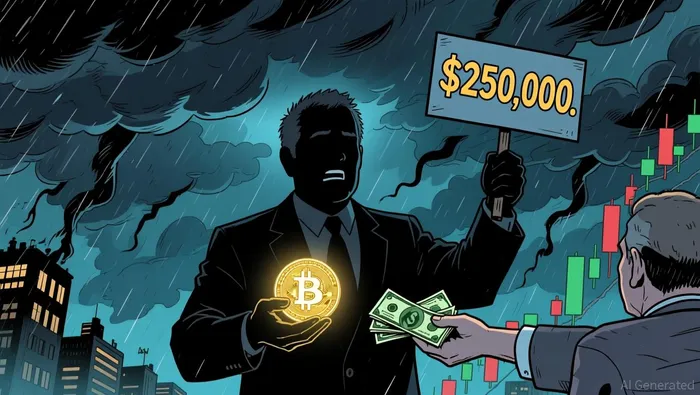
This is a narrative violation - a gap between what a public figure says and what the data shows - and it matters because Kiyosaki's Bitcoin commentary reaches millions of people who treat his endorsement as a conviction signal.
The Pattern
Kiyosaki built a $100 million fortune on the premise that financial literacy changes your life. His Rich Dad Company educates people through books, courses, and media. In February 2026, he published a piece titled "A Spiritual Mission: Why Every Business Needs One" on his own platform. A week ago, on July 1, a report cited him saying the "physical mission is to achieve the spiritual mission."
That spiritual mission is financial education. The physical mission is the business machine that funds it.
When you look at his Bitcoin behavior through that lens, the picture clears. He didn't just time a great exit. He timed it, then doubled down on the bullish narrative publicly. That isn't hypocrisy in the moral sense. It's an incentive structure. Fear-driven financial education sells more when the market is shaking than when everyone feels safe. A $250,000 Bitcoin target keeps people engaged with his content - and buying his courses - even after he's already taken his profits.
The Market Reality
Bitcoin is currently trading around $60,700, with a market cap of $1.22 trillion. Its 52-week range is $57,770 to $125,500. The broader crypto fear and greed index sits at 19 - near extreme fear levels. Bitcoin dominance stands at 58%, meaning it still controls more than half of the entire crypto market.
Kiyosaki is watching the same market he sold out of and telling his audience to prepare for a reversal. There's nothing inherently wrong with being right about direction while being out of the trade. Plenty of analysts forecast rallies they're not positioned for.
But the combination of a massive profit-taking event followed by public price targets is the kind of asymmetry that should raise eyebrows, not lower them.
What the Crypto Community Saw
Crypto-native communities didn't miss this. Reddit threads appeared within days of the sell-off with the blunt assessment: Kiyosaki doesn't understand Bitcoin. The critique isn't that he made money - buying at $6,000 was a great trade. The critique is that he treated Bitcoin like a trade, not a conviction.
Bitcoin's structure - fixed supply, no central authority, immutable protocol - was designed for people who believe in scarcity in a world of infinite money printing. If you understand that, you hold. If you're treating it like another asset class to swing-trade, you sell at peaks and tell everyone else to hold. The data tells you which category Kiyosaki falls into.
The Counterargument
Some will say he had a legitimate exit strategy, that no one owes anyone their personal portfolio, and that his financial education mission is still valid regardless of his Bitcoin position. That's fair. He's entitled to manage his own money. His financial literacy content has helped real people.
But here's the thing: when your public commentary shapes the investment decisions of millions of followers, your own behavior is part of the message. You can't signal maximum conviction and zero conviction at the same time.
The data resolves the ambiguity.
What to Take From It
Kiyosaki's Bitcoin behavior doesn't change the thesis on Bitcoin itself. Scarcity in a world of infinite dollar creation still holds. The fear and greed index at 19 suggests the market is pricing in more pessimism than the fundamentals require. Bitcoin at $60,700, barely above its 52-week low, is a distance from the $125,500 high that would have existed.
What Kiyosaki's pattern does change is how you should weight public Bitcoin commentary. The loudest voices aren't always the ones with skin in the game. Sometimes they're the ones who already took theirs off the table.
The best investors read the data, not the headlines. Kiyosaki's words pointed to $250,000. His wallet pointed to zero Bitcoin. Pick your poison.
Bitcoin scarcity doesn't care about your spiritual mission.