What Does OpenAI's 5% Equity Offer to the U.S. Government Mean? Impact on IPOs, Anthropic, and AI Regulation
OpenAI offers the US government a 5% stake to secure regulatory immunity for its IPO, potentially suffocating rival Anthropic and creating severe conflicts of interest.
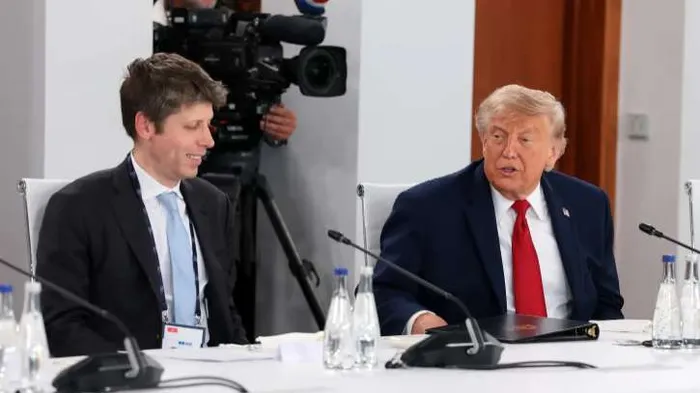
AI giant OpenAI recently made a stunning move: their CEO Sam Altman proactively approached the Trump administration with a proposal directly. Give a 5% equity stake in the company to the U.S. government. Based on OpenAI's current valuation of approximately $852 billion, this stake is worth over $42 billion. Put it into a mechanism related to a government or public wealth fund, in exchange for political relationships, regulatory easing, and a public-interest narrative.This is far from an act of charity; it is a highly calculated business and political gambit. OpenAI is doing this to secure a political umbrella before its upcoming trillion-dollar massive Initial Public Offering (IPO), while grabbing an early lead on core resources like computing power and electricity to suppress its competitors.
Why Does OpenAI Do This? For a Better IPO and Absolute Political Immunity
The most direct purpose behind OpenAI's proactive offer of a 5% stake is to ensure that its upcoming trillion-dollar IPO can proceed with absolute safety and smoothness.
In the current political climate, the AI industry faces intense government scrutiny regarding job losses, national security, and data privacy. If OpenAI followed the standard route, it could face prolonged antitrust investigations or harsh legislative restrictions. By ceding 5% of its shares, OpenAI cleverly transforms the Trump administration into its "co-owner".
Once the government holds this multi-billion dollar asset, the dynamic changes completely: any severe penalty, antitrust breakup, or restrictive bill against OpenAI would directly crash the company's valuation, thereby shrinking the state's core public assets and fiscal returns. Consequently, regulators will inevitably hesitate to act. This equity is essentially the ultimate political "protection fee" before going public, clearing the biggest regulatory black swans on its path to IPO.
What's the Impact on Anthropic? Suffocating Competitors with Political Privileges
This gambit completely flips the chessboard on OpenAI's arch-rival, Anthropic. On the surface, Altman looked generous by suggesting the government should take 5% from Anthropic and Google as well. But anyone who understands business knows that whoever proposes the rule first and aligns with Trump in the White House gets the absolute first-mover advantage.
The most immediate fallout will be a massive disparity in their IPO timelines. With the Trump administration's financial interests deeply tied to its success, OpenAI will get a green light through the listing review process. It is highly likely to pull off its mega-IPO way ahead of Anthropic, vacuuming up almost all available global capital in the market and leaving Anthropic with nothing but crumbs.
Even more fatally, the AI war is no longer just about engineers optimizing algorithms—it has moved to a brutal scramble over physical resources like nuclear power grid allocations and land approvals for hyper-scale datacenters. Gifting equity buys OpenAI a supreme political privilege. While Anthropic plays by the books and waits in line for power grids, OpenAI can naturally disguise its corporate resource demands as the "expansion of core national assets". This monopoly on resources driven by political leverage can literally suffocate Anthropic at the physical layer in the computing war ahead.
What Does It Mean for the Government and Public? A Wealth Illusion That Hijacks Public Power
For the U.S. government and the American people, this deal looks like a massive cash cow at first glance, but beneath the surface, it is a complete quagmire of conflicts of interest.
For the American People: Altman is selling a grand illusion of "shared prosperity". He claims this 5% stake will fund a sovereign wealth fund, and if OpenAI hits it big, dividends will go straight into the pockets of ordinary Americans to offset job losses caused by automation. It makes citizens feel like they are shareholders in the tech revolution, sitting back and collecting welfare.
But for the Government and Society: This sets up a terrifying institutional crisis. When the U.S. government simultaneously becomes the "regulatory referee" and a "major shareholder," impartiality goes completely out the window. If OpenAI's models suffer critical safety flaws, massive data leaks, or are weaponized for election manipulation in the future, would the government dare to hit them with crushing fines or shut them down? Absolutely not. Slapping severe penalties on OpenAI would tank its valuation, shrink the national fund, and directly dock the hard cash in every American citizen's pocket. This tight entanglement essentially turns the government and the public into OpenAI's financial hostages, transforming supreme public power into a legal shield for the tech giant's opaque expansion and regulatory evasion.
Conclusion
OpenAI's proactive ceding of a 5% stake to the Trump administration completely blurs the line between tech giants and state power. It is not financial generosity, but a masterclass in political calculus. At the relatively low cost of 5% equity, OpenAI buys lifetime insurance for its trillion-dollar IPO, turns the supreme state apparatus into the ultimate guarantor of its commercial empire, and preemptively defines the rules of the game for the future AI era.