Trump Rang the Bell. The Market Heard Liquidity.
Trump launches child investment accounts to signal pro-market stance, reinforcing risk-on sentiment and driving major indices to record highs amid strong AI momentum.
The Trump trade is less about one policy and more about the market believing this administration wants equities higher.
The past 24 hours gave traders exactly the kind of Trump headline they know how to use: not a detailed policy model, not a spreadsheet-driven catalyst, but a signal. The White House wants to be seen as pro-market, pro-retail investor, and closely attached to higher stock prices. That does not automatically make every Trump policy bullish. But in a market already leaning risk-on, the symbolism matters.
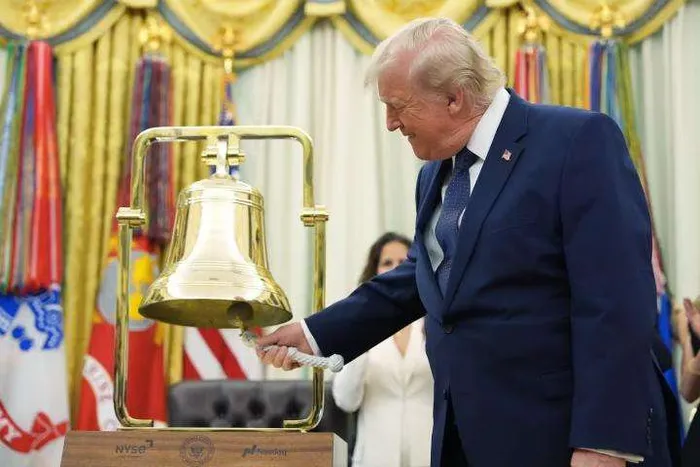
The headline came through the launch of "Trump accounts," investment accounts for children under 18. Trump rang the opening bells of the NYSE and Nasdaq from the Oval Office and told investors the stock market was "going to go through the roof." That was the line traders cared about. The accounts themselves may become a long-term savings vehicle, but the immediate market read was much simpler: the president was publicly tying household wealth creation to equity ownership.
That is why the event landed differently from an ordinary policy rollout. A new account structure for children is not large enough by itself to reprice the S&P 500. It does not change earnings estimates overnight. It does not immediately alter Fed policy, corporate margins, or Treasury yields. But it does tell investors something about the political posture around markets. Trump is not treating stocks as a side effect of policy. He is treating them as part of the policy message.
The tape was already willing to hear it. The Dow closed at a record high while the Nasdaq rose more than 1% and reclaimed its 50-day line, with AI, chip, and memory names helping lead the move. That is important because Trump did not create the rally from scratch. The market was already rotating back into growth. Semiconductors were catching bids. Memory stocks were trading like scarcity assets. AI infrastructure was still the dominant risk-on engine. The political headline simply arrived at the right moment.
This is how the Trump trade often works. It is rarely just one isolated policy. It is a bundle of expectations: lower regulatory friction, friendlier treatment of capital markets, pressure for stronger domestic investment, and a president who clearly wants stock gains to be part of the national wealth story. Traders do not need every detail to be clean. They just need the direction of travel to feel supportive.
The more interesting part is retail participation. By putting children's investment accounts at the center of the message, Trump is trying to frame the stock market as a household wealth machine rather than just a Wall Street scoreboard. That matters for sentiment. If more Americans are encouraged to think of equities as a long-term default savings vehicle, the political downside of a major market drawdown gets larger. Investors understand that. A government that wants more families in the market may also become more sensitive to policies that could break the market.
That does not mean the trade is risk-free. Tariffs can still hit margins. Immigration policy can still affect labor costs. Fiscal expansion can still pressure yields. If inflation runs hot, the Fed will not ignore it just because the White House likes a higher Dow. And if Treasury yields rise too quickly, long-duration growth stocks can still get hit, no matter how friendly the political messaging sounds.
There is also a valuation problem. When markets start pricing political support as a cushion, they can become less disciplined. Dips get bought faster. Momentum gets extended. Expensive stocks become more expensive because investors convince themselves that policy will remain a tailwind. That can work for a while, especially when earnings momentum is strong. But it also raises the cost of disappointment. If the policy signal changes, or if tariffs and inflation move back to the center of the tape, the same investors who treated Trump as a liquidity signal may suddenly treat him as a volatility source.
For now, though, the market is choosing the friendlier interpretation. The "Trump accounts" launch gave investors a clean narrative: more retail ownership, more stock-market participation, and a president openly cheering equities higher. In a market already led by AI infrastructure and semiconductor momentum, that was enough to reinforce the risk-on mood.
The trade is not that the account program itself will flood the market with immediate buying power. It will not. The trade is that Washington is again speaking the market's language. Wealth creation. Ownership. Higher stocks. Confidence. Those are not balance-sheet items, but they influence positioning. When traders believe the administration is leaning with the market instead of against it, they give momentum more room to run.
Trump rang the bell. The market heard something louder: stay long until the policy signal changes.