Trump’s Unilateral Iran Ceasefire Extension: A Fragile Pause With a High-Risk Near-Term Catalyst
The immediate market-moving event unfolded on Tuesday, hours after the ceasefire was set to expire. President Trump announced an indefinite extension of the truce, a reversal from his earlier stance that he opposed lengthening it. The move came at the request of Pakistani mediators, but it was made unilaterally by the U.S. side. The key detail is the lack of a deadline: Trump's statement suggests that the truce's extension is open-ended from Washington's perspective. Iran, however, did not issue an immediate response, leaving the deal's status fundamentally uncertain.
This created a classic tactical pause. The immediate threat of resumed U.S. bombing receded, and markets reacted accordingly. U.S. stock futures rose and the dollar wavered on Wednesday as the news hit, with S&P futures up 0.5% and Nasdaq futures gaining 0.6%. The setup was clear: near-term war risk was removed, providing a temporary boost to risk sentiment.
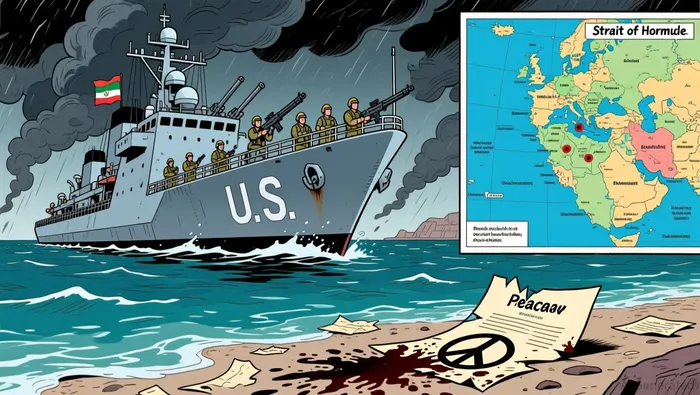
Yet the pause introduces core uncertainty. The extension is not a negotiated agreement but a U.S. unilateral declaration. With Iran yet to decide whether to send a delegation to Pakistan for US talks and the naval blockade of Iranian ports still in place, the path to a permanent deal remains obstructed. The market's initial relief may have been premature, as the underlying conflict and the closure of the Strait of Hormuz are still unresolved.
The Mechanics of the Pause: What's Changed and What's Not
The extension's mechanics reveal a U.S. tactical advantage. President Trump stated he is extending the ceasefire "until such time as their proposal is submitted", an open-ended condition that places the onus on Iran to act. This is a unilateral declaration, not a negotiated agreement. The U.S. maintains its naval blockade in the Strait of Hormuz, a critical chokepoint for global oil flows, while Iran has condemned this as an "act of war". The blockade remains in place, a persistent source of friction that the ceasefire does not resolve.
The core issues that sparked the conflict remain entirely unresolved. Iran's nuclear stockpiles and the U.S. military presence in the region are the fundamental sticking points. The ceasefire extension does not alter the strategic standoff; it merely pauses the fighting while the underlying dispute simmers. This creates a fragile, artificial calm.
The stalemate is now codified by Iran's position of "not negotiate under threat and force". This principle, which Iran's ambassador described as a "truth universally acknowledged," directly clashes with the U.S. posture of maintaining pressure via the blockade and the threat of renewed bombing. The U.S. has made clear it will resume attacks if talks fail, while Iran insists it will not return to the table under duress. This mutual intransigence is the primary risk. The ceasefire pause does nothing to bridge this gap. It simply delays the inevitable confrontation, buying time for neither side to change its fundamental position.
Market Impact and Forward Scenarios
The market's initial reaction was a classic relief rally. The immediate removal of war risk sparked a pop in futures and after-hours trading. In response to that announcement, stocks moved higher in after-hours trading with major ETFs gaining. This was a technical bounce, not a fundamental reassessment. The rally was built on the fading fear of a sudden, uncontrolled escalation, not on a new, durable peace deal.
That relief has now faded. The subsequent market action tells a different story. The U.S. dollar steadied in early Asian trade on Wednesday, as skepticism over U.S. President Donald Trump's announcement of an indefinite extension of a ceasefire with Iran lifted demand for the safe-haven currency, pushing it to a one-week high. This shift is critical. It shows that safe-haven flows can reassert themselves quickly if confidence in the ceasefire's durability erodes. The dollar's rise amid ceasefire skepticism is a direct signal that the market is treating the pause as fragile.
The forward setup is now defined by a single, immediate catalyst: Iran's response to the U.S. extension. The U.S. has made clear it will resume bombing if talks fail, while Iran insists it will not negotiate under threat. Iran does not "accept negotiations under the shadow of threats". The primary risk is that Iran refuses to send a delegation to Pakistan for talks. That would likely trigger a sharp market sell-off, as the fragile pause collapses and the threat of resumed military action returns with full force.
For now, investors are shifting attention elsewhere. Investors may be starting to shift their attention elsewhere, as the ceasefire news cycle loses momentum. But the underlying conflict remains unresolved, and the mechanics of the pause create a high-stakes waiting game. The market's next major move will hinge entirely on whether Iran chooses to engage or double down on its intransigent position.