The Oversold Trap: Why a Low RSI Alone Is a Warning Sign, Not a Buy Signal
An oversold reading is a starting signal, not a buy trigger. The most common technical gauge for this condition is a 14-day Relative Strength Index (RSI) reading below 30. This level suggests a stock has been sold off aggressively, potentially creating a short-term bounce opportunity. Yet, as the evidence reminds us, markets can stay oversold for days or weeks, and a low RSI alone offers no insight into whether the decline is temporary or a sign of permanent trouble. The critical risk is mistaking a value trap for a genuine bargain. A value trap appears cheap because the market has correctly priced in long-term deterioration-a broken business model, eroding competitive advantages, or structural headwinds. The price may be low, but it is low for good reason.
The true investment opportunity exists only when the oversold condition is combined with a durable competitive moat and a sufficient margin of safety. This requires a disciplined assessment of the decline's cause. Was it driven by shaky markets reacting too strongly to negative news, pushing a fundamentally sound company's price lower than its intrinsic value? Or does the drop reflect a permanent change in the business's ability to generate cash flow? The latter is the hallmark of a value trap. As Benjamin Graham emphasized, a real value investment trades below intrinsic value due to temporary factors, not permanent ones. The oversold signal merely flags a potential mispricing; it is the fundamental analysis that determines if the mispricing is fleeting or fatal.
The Value Investor's Checklist: Moats, Cash Flow, and Margin of Safety
For the patient investor, an oversold reading is merely an invitation to dig deeper. The classic value framework provides the tools to separate a genuine bargain from a value trap. This approach hinges on three non-negotiable pillars: a durable competitive moat, consistent cash flow generation, and a sufficient margin of safety.
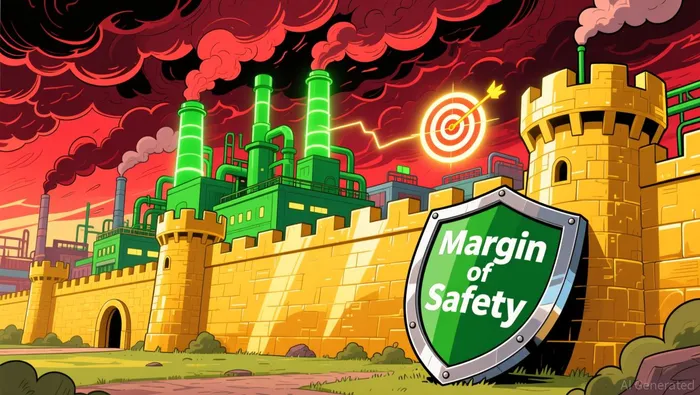
First, a competitive moat is the bedrock of long-term compounding. It is the economic equivalent of a fortress wall, protecting a company's profits from competitors. This can take many forms-a powerful brand that commands premium pricing, a unique cost advantage that allows for higher margins, or a network effect that makes the business more valuable as it grows. A wide moat ensures that even during periods of market fear, the business retains its ability to earn returns on capital. Without it, a low price is often a warning sign of permanent damage, not a temporary mispricing.
Second, the business plan must be clear and the cash flow consistent. A real value investment, as defined by Benjamin Graham, is one where the price is low due to temporary factors. This is evidenced by a business that continues to generate cash for shareholders. The market discounts future cash flows, not past earnings. Therefore, a stock that is absurdly cheap relative to its historical earnings is a red flag, suggesting something fundamental is wrong. Conversely, a company with a straightforward, understandable plan and a track record of converting sales into cash is far more likely to be a true value play. As the evidence notes, beware of a business plan that is "not understandable or is unprofitable" or one that is "outdated by new technologies."
Finally, valuation must provide a margin of safety. This is the buffer that protects the investor when their analysis is slightly off. A specific metric like the forward price-to-earnings (P/E) ratio helps gauge this discount. In today's volatile market, a stock can be oversold not just technically, but also fundamentally, when its forward P/E trades at a significant discount to its historical average or sector peers. This dual signal-technical oversoldness combined with a cheap forward P/E-suggests the market's fear may be overblown. The goal is to buy a quality business at a price that is substantially less than its intrinsic worth, ensuring that even if the recovery is gradual, the investment is positioned for long-term success.
Catalysts and Scenarios: Mapping the Path to Intrinsic Value Realization
For the patient investor, the oversold signal is merely the starting line. The real work begins in mapping the path back to intrinsic value. This requires identifying the specific catalysts that could trigger a re-rating and weighing the likelihood of different outcomes. The key is to separate events that are within the company's control from those driven by external market forces.
Potential catalysts for recovery often center on management actions or industry shifts. A change in leadership, a clear and disciplined restructuring plan, or a strategic pivot to address a temporary headwind can provide a tangible reason for the market to reassess. More broadly, improving industry conditions-such as easing supply chain constraints, a stabilization in commodity prices, or a resolution of geopolitical tensions-can lift all boats, especially for companies with a durable competitive position. These catalysts act as the spark that reignites investor confidence in a business that was previously misunderstood.
The mechanism by which market fear creates mispricing is straightforward. In periods of shaky markets reacting too strongly to negative news, price swings become more intense. This can push some stock prices lower than they deserve, even when the companies themselves remain fundamentally strong. The market's forward-looking nature means it discounts future cash flows, not past earnings. When fear dominates, the discount rate applied to those future flows increases sharply, collapsing the present value. This creates a gap between the current price and the intrinsic value that persists as long as the fear remains unchecked.
Yet, the company's ability to stay ahead of competition is the critical factor in determining if the current price offers a sufficient margin of safety. A genuine value opportunity is one where the price is low due to temporary factors, but the underlying business model remains intact. This is where a competitive moat becomes paramount. A wide moat-whether from brand strength, cost advantages, or network effects-acts as a buffer. It ensures the company can continue to generate cash flow even during downturns, providing the foundation for a recovery. Without it, a low price is often a warning sign of permanent damage, not a temporary mispricing. The bottom line is that volatility and broad market fears create the opportunity, but only a business with a defensible position can reliably compound through the cycle and realize its intrinsic value.
Risks and Watchpoints: Guarding Against the Value Trap
The oversold signal opens a door, but the investor must remain vigilant. The primary risk is that the stock remains oversold for an extended period, not because of market overreaction, but because the underlying business is deteriorating further. As the evidence warns, oversold conditions can persist for a long time, and for a fundamental value investor, this is the most dangerous scenario. A stock can be trading well below its typical value metrics for valid reasons-the company's competitive position is eroding, its cash flows are weakening, or its business model is becoming obsolete. In these cases, the low price is not a bargain but a warning sign of permanent damage.
The critical watchpoint, therefore, is the health of the competitive moat and the consistency of cash flow. A durable moat is the foundation of a true value investment; without it, the business lacks the resilience to weather temporary storms. Investors must monitor for any signs of weakening-increased competitive pressure, loss of pricing power, or technological disruption. More importantly, they must track the cash flow. As a key indicator, past earnings have little effect on the future price of an investment. The market discounts future cash flows, not past profits. A stock that is absurdly cheap relative to past earnings is a classic red flag, suggesting something fundamental is wrong. The investment thesis is invalidated if cash flow begins a persistent decline, confirming the stock is a value trap.
Finally, the investor must watch for the resolution of the specific catalysts that were identified as potential triggers for a re-rating. These could be management actions, industry improvements, or the resolution of a temporary headwind. The absence of these catalysts, or their failure to materialize as expected, would suggest the rebound may not materialize. The path to intrinsic value realization depends on these events. If they stall or fail, the market's fear may have been justified all along. The bottom line is that the oversold condition creates a potential mispricing, but only time and careful monitoring of the business fundamentals will determine if that mispricing is fleeting or fatal.