Hilltop Holdings Q1 2026: Why the Downgrade Makes Sense When You Check What's Actually Priced In
The market had built a clear narrative for Hilltop's Q1 2026: another beat-and-raise quarter. After delivering an 8.9% year-over-year revenue beat last quarter, investors were pricing in momentum. The whisper number sat at 5.9% revenue growth-a conservative build from the prior quarter's performance that assumed the bank would continue executing in a favorable regional banking environment.
What management delivered was a guidance reset.
The downgrade from Hold to Sell wasn't triggered by a miss on Q1 revenue-it was triggered by the loan growth outlook collapsing to 0-3% from the previous 2-5% range. That's not a slight adjustment; that's a fundamental recalibration of the growth story. When you're pricing in a trajectory, cutting the top-line growth assumption by half signals something meaningful about the underlying business dynamics.
The expectation gap is stark. Investors expected a continuation of last quarter's momentum-perhaps even a beat that would lift the price target above the current $37.50 consensus. Instead, they got a clear signal that the higher-for-longer rate environment is doing real damage to the lending book. The 11-basis-point NIM improvement to 2.86% isn't enough to offset the structural headwinds in mortgage, fixed income, and structured finance.
This is classic expectation arbitrage failure. The market had priced in the bull case-steady loan growth, sustained fee income, margin expansion continuing. What Hilltop delivered was a reality check: the banking segment is struggling to generate consistent growth, and the broker-dealer operations are feeling the fee compression. The gap between what investors expected and what management guided isn't a variance-it's a complete reset of the thesis.
What the Bulls Got Right (And Wrong)
The bulls had two clear wins in Q1. Tangible common equity to assets improved to 12.4% from 12.0%, reflecting effective capital management even as the company continued share buybacks. That's a solid defensive metric, and it gives the balance sheet real cushion. The net interest margin also delivered, expanding 11 basis points to 2.86% surpassing the initial estimate of 2.75%. That margin expansion should theoretically add roughly 1% to tangible book value-a nice tailwind when you're trying to hold the line.
But here's where the bull thesis cracks: that 1% accretion is being swamped by the loan growth collapse. The guidance cut to 0-3% from the prior 2-5% range isn't just a slight adjustment-it's a fundamental rewiring of the growth story. When you're running a regional bank, loan growth is the engine. Hilltop just turned off the engine.
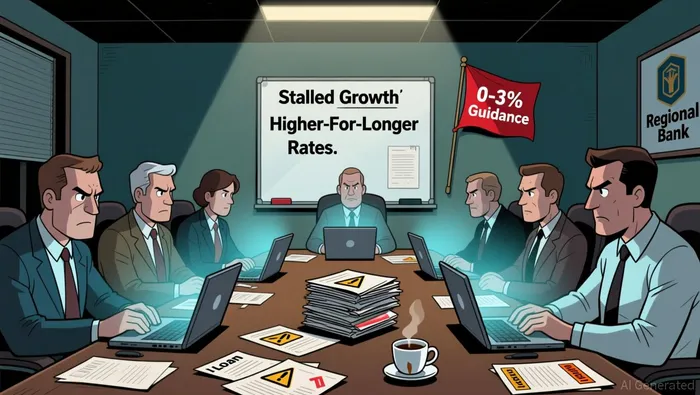
The fee income underperformance confirms the headwinds in mortgage, fixed income, and structured finance aren't theoretical-they're hitting the P&L in real time. The bears were right all along. The higher-for-longer environment is doing structural damage to the revenue streams that matter most. You can have a strong capital position and expanding margins, but if the top line isn't growing and fee generation is compressing, the investment thesis collapses. That's exactly what happened here.
Valuation Reality: Is the Stock Already Pricing in the Downside?
At $37.56, Hilltop trades essentially flat against the $37.50 consensus price target and just below the $39 analyst fair value consensus price target of $37.50. On the surface, this looks like a stock in no-man's-land-neither expensive enough to trigger a decisive sell nor cheap enough to justify a buy. But the real question isn't where the price is relative to targets. It's whether the market has already baked in the downside or if there's still expectation arbitrage left to exploit.
The 1-year return tells the story: 32.66% suggests significant optimism already priced in. That's not a stock that's been punished for disappointing fundamentals-that's a stock that rallied on momentum and hope. The 30-day return of 5.86% adds fuel to that read. This isn't a stock that's been selling off on the guidance collapse; it's been climbing, which means the market either hasn't fully absorbed the implications yet or is betting the downgrade is overblown.
Here's where the valuation metrics get uncomfortable. Hilltop trades at a P/E of 13.55x above the industry average of 11.7x-and well above the 7.5x fair ratio estimate that points to richer pricing. For a regional bank with loan growth guidance cut in half and fee compression hitting the P&L, that multiple is a liability, not an asset. You're paying premium prices for a business whose growth engine just stalled.
The Zen Rating quant model cuts through the noise. While analysts sit on Hold, the model rates HTH as a Sell with an average return of -4.50% per year for similar stocks. That's not a marginal call-that's a signal that the market may still be underestimating the downside. The model isn't buying the $39 fair value narrative, which hinges on mortgage exposure and Texas concentration not biting too hard and credit costs staying contained. Given the guidance reset and the structural headwinds in the lending book, that's a lot of "if"s built into the bull case.
So where does this leave us? The stock is pricing in a continuation of the status quo-steady execution, contained credit costs, no surprises. But the guidance collapse signals that the status quo is gone. When you combine a premium multiple (13.55x vs 7.5x fair) with a growth story that's been fundamentally rewired, the math gets ugly fast. The 32.66% year-long gain was the market pricing in optimism. The downgrade is the reality check. And at these levels, there's still expectation arbitrage-for the bears.
What's Next: Catalysts and Watch Points
The downgrade from Hold to Sell hinges entirely on what happens next. Hilltop just delivered a guidance reset-Q2 will determine whether this was a one-time recalibration or the start of a downward trend. The next earnings call on April 24, 2026 is the critical data point.
Here's what to watch.
Loan growth is the make-or-break metric. Management guided to 0-3% for the quarter. If Q2 actuals come in below 1%, that guidance will look optimistic-and the Sell rating will be validated. The 0-3% range itself is a far cry from the 2-5% prior guidance that investors priced in. When you're a regional bank and the lending engine stalls, the revenue trajectory collapses. Watch the Q2 print closely-if it stays anchored near the bottom of that range, the market will reprice the stock again.
The higher-for-longer environment is still doing damage. Mortgage origination through PrimeLending remains under pressure, and fee income from the broker-dealer segment (Hilltop Securities and Momentum) is compressing. These aren't cyclical blips-they're structural headwinds that hit the P&L directly. Any further margin compression or guidance cut confirms the bear thesis. The 11-basis-point NIM improvement to 2.86% isn't enough to offset these pressures when the top line isn't growing.
But the bull case isn't dead-just on life support. A beat-and-raise in Q2 could restore the Hold rating. The market still has the average price target at $39 versus the current $37.57, and analysts have reconfirmed estimates over the last 30 days. If Hilltop delivers strong loan growth and fee income rebounds, the stock could reclaim momentum. The key is whether management signals confidence in the guidance or hints at further cuts.
Listen for tone on the call. Is the 0-3% guidance a one-time reset, or is management signaling more pain ahead? The difference between those two narratives will drive the next move. If the guidance cut was a necessary cleanup to set up future beats, the stock could stabilize. If it's the start of a trend, the downgrade is just the beginning.
The binary nature of this setup is the opportunity. The market has priced in continuation-steady execution, no surprises. But the guidance collapse signals that continuation is off the table. What happens in Q2 will determine whether the Sell rating stands or whether the stock reclaims its place in the regional bank rally.
Implement a long-only Mean Reversion strategy for HTH over the past 2 years. Entry: RSI(14) < 30 and price closes below the 20-day SMA. Exit: price closes above the 20-day SMA, or after 20 trading days, or TP +8%, SL -4%.