Market Outlook: A Crucible Week for Tech, Central Banks, and Geopolitics
Geopolitical deadlock and the end of the Powell era converge with Big Tech earnings and Berkshire Hathaway's first post-Buffett meeting to drive market volatility.
Welcome to one of the most consequential weeks of the 2026 financial calendar.
As we head into the trading week of April 27 to May 1, investors face a formidable gauntlet of macroeconomic, corporate, and geopolitical catalysts. From a synchronized holding pattern among global central banks and a critical slate of Big Tech earnings, to the historic first Berkshire Hathaway annual meeting of the post-Buffett era and deepening geopolitical gridlock in the Middle East, the coming days will force markets to digest a heavy dose of transition and uncertainty.
Here is what you need to know for the week ahead.
Geopolitical Overhang: US-Iran Deadlock Deepens
The macroeconomic backdrop remains heavily clouded by the nearly two-month-old US-Iran conflict, which continues to ripple through global supply chains and energy markets. Over the weekend, hopes for a diplomatic breakthrough evaporated, leaving a palpable sense of deadlock. Neither Washington nor Tehran appears willing to moderate their rhetoric, and no definitive negotiations are currently scheduled.
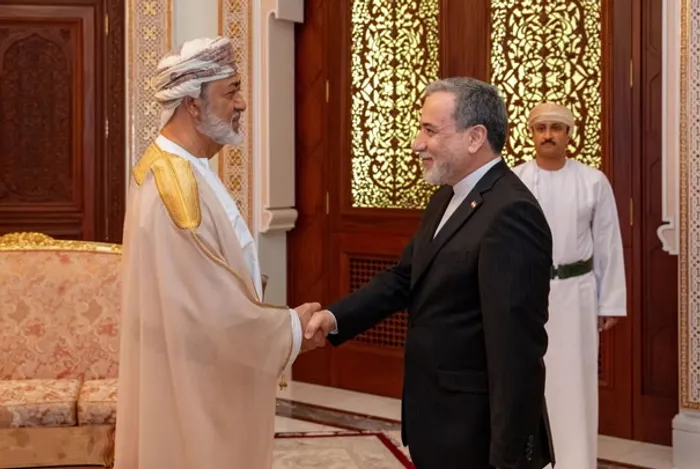
The diplomatic chessboard saw rapid movement but little progress. Iran's foreign minister, Abbas Araghchi, shuttled between Oman and Pakistan, describing his talks with mediators as "fruitful" but publicly questioning the United States' commitment to diplomacy. Adding to the geopolitical complexity, Araghchi begins a trip to Russia on Monday to meet with President Vladimir Putin. Both nations, heavily burdened by Western sanctions, have forged an increasingly tight economic and military alliance that complicates Western diplomatic leverage.
Meanwhile, in the US, President Donald Trump abruptly canceled a planned trip to Pakistan by his envoys, Steve Witkoff and Jared Kushner, citing inadequate Iranian proposals and excessive travel costs. The cancellation occurred shortly before a chaotic incident at the White House Correspondents' Association dinner in Washington, where Trump was rushed offstage after a gunman fired shots at his security detail. While Pakistani mediators are desperately trying to forge a "bridging agreement" to restart direct talks, Trump's insistence on maintaining a complete blockade on Iranian shipping—and his claim that Tehran offered a superior proposal just ten minutes after he canceled the envoy trip—leaves the immediate trajectory of the conflict highly uncertain.
Monetary Policy: The End of the Powell Era
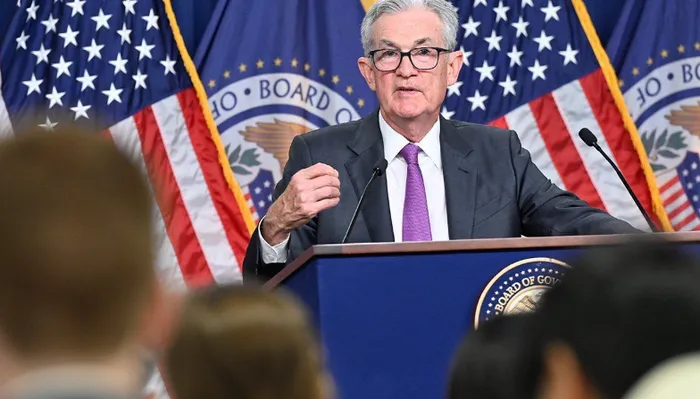
This week also brings a synchronized parade of central bank decisions. The Federal Reserve, the European Central Bank, the Bank of Japan, the Bank of England, and the Bank of Canada are all slated to announce their rate decisions. The unanimous expectation across the board is a hold.
For US markets, the Federal Open Market Committee (FOMC) meeting on April 28-29 takes center stage, with rates universally expected to remain locked in the 3.50% to 3.75% range for the third consecutive time. According to the widely monitored CME FedWatch Tool, markets have fully priced in a pause for this month.
However, the real focus extends far beyond the immediate rate decision. This meeting marks the likely conclusion of Jerome Powell's tenure as Fed Chair. Investors are meticulously analyzing the implications of the imminent power transition following the recent Warsh hearings. Furthermore, markets are looking for forward guidance on the pace of monetary policy following the end of balance sheet reduction, as well as the Fed's assessment of how recent oil price volatility—driven by the Middle East conflict—might stall the disinflationary process. A recent Reuters survey of 103 economists highlights a growing hawkish consensus: over half expect benchmark rates to remain untouched through September, and nearly a third predict zero rate cuts in 2026—a probability that has doubled since March.
Big Tech's Ultimate Test and the Energy Read-Through
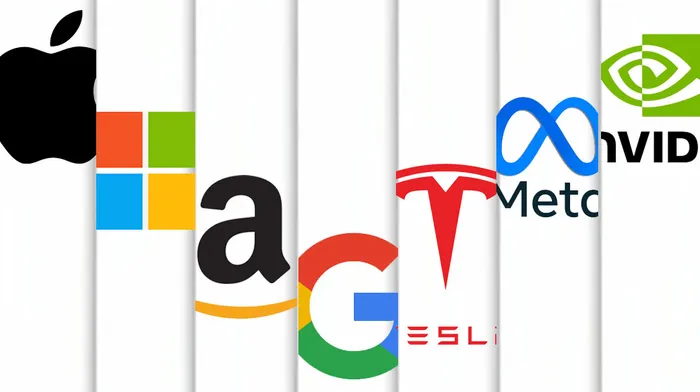
On the corporate front, peak earnings season arrives with five of the "Magnificent Seven" reporting first-quarter results. Microsoft, Alphabet, Amazon, and Meta will report on Wednesday, followed by Apple on Thursday. With Tesla's numbers already in the rearview mirror and Nvidia scheduled for later in the quarter, this week is the ultimate litmus test for the tech sector's resilience in a wartime economy.
The stakes are extraordinarily high. Analysts at Morgan Stanley project that the Magnificent Seven's net income will grow by a blistering 25% in 2026, vastly outpacing the 11% growth expected for the remaining S&P 493. This anticipated outperformance has driven the Roundhill Magnificent Seven ETF (MAGS) up 13% over the past month, compared to a 9% gain for the broader S&P 500.
However, investors are demanding clarity on capital expenditures. This week will provide vital updates on how tech giants are managing their massive AI spending projections. The tension between innovation and cost-discipline is acute; Meta's recent announcement of 8,000 layoffs and Microsoft's introduction of buyout packages indicate that Big Tech is aggressively streamlining operations to fund the AI arms race. As Bank of America's equity strategy team, led by Savita Subramanian, recently noted, the tech industry is increasingly a sector of "haves versus have-nots," offering rich idiosyncratic opportunities despite broader market volatility.
Beyond tech, the earnings slate is packed with major players. Telecom giants Verizon and T-Mobile report early in the week, alongside payment behemoths Visa and Mastercard. Crucially, the energy sector will step into the spotlight with reports from Exxon Mobil, Chevron, BP, Phillips 66, Valero, and Dominion Energy. These reports will serve as a vital gauge for how the ongoing blockade and war in Iran are physically and financially impacting global energy supply chains and refining margins.
Berkshire Hathaway: The First "Woodstock" Without Warren
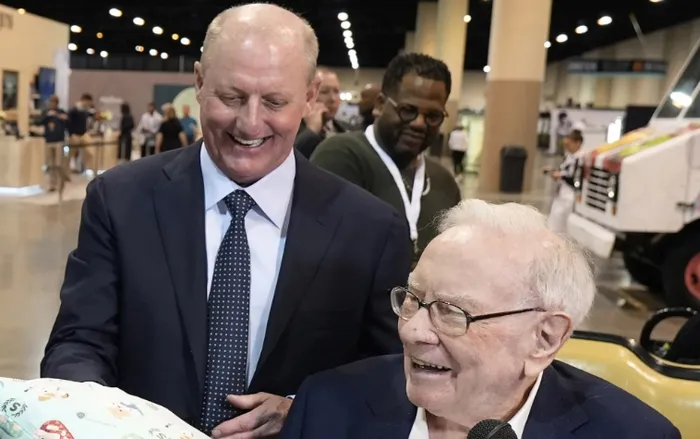
Finally, the week culminates in Omaha, Nebraska, for an unprecedented milestone in American capitalism. Tens of thousands of shareholders will make their annual pilgrimage for Berkshire Hathaway's annual meeting—the first in six decades not hosted by Warren Buffett.
Following his surprise retirement on May 3 of last year, CEO Greg Abel is now firmly at the helm. Investors are bringing sharp questions to this year's gathering. Chief among the concerns is performance: Berkshire's stock has declined 14% since Buffett's departure, drastically underperforming the S&P 500, which has surged 26% over the same period.
Furthermore, Abel faces mounting pressure regarding capital allocation. Berkshire ended December sitting on a staggering, record-breaking $373 billion mountain of cash, Treasury bills, and liquid assets—a hoard larger than the entire market capitalization of corporate titans like Chevron, Palantir, or Cisco. With acquisitions expensive and stock valuations high, market watchers are eager to hear Abel's deployment strategy. Speculation is even mounting that Berkshire might utilize this dry powder to purchase Buffett's remaining 14% stake in the conglomerate, a position valued at roughly $138 billion.
Abel will also showcase his new leadership dynamic, sharing the stage for a Q&A session with NetJets CEO Adam Johnson (recently appointed president) and BNSF Railway CEO Katie Farmer. This operational pivot away from the traditional Buffett-Munger dynamic will give Wall Street its first unfiltered look at the decentralized management style that will carry Berkshire into the future.
The Bottom Line
Between the transition of power at the Federal Reserve, the dawn of a new era at Berkshire Hathaway, the relentless AI cap-ex cycle in Big Tech, and a geopolitical environment fraught with peril, this week is defined by structural shifts. Investors should brace for elevated volatility, particularly in the energy and tech sectors, as markets attempt to price in a new normal on multiple fronts simultaneously. Maintain defensive positioning where necessary, but keep an eye out for the idiosyncratic opportunities that periods of high transition inevitably create.