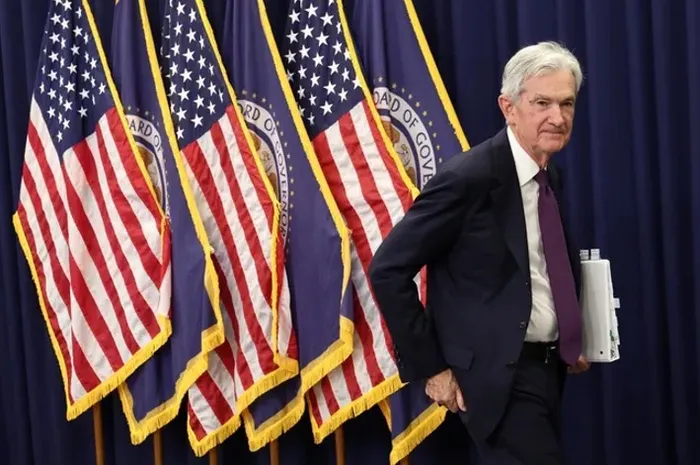
Powell's Farewell as Fed Chair: Stays on as Governor, Rate-Cut Hopes Fade, Caution on Energy Shock
The Fed holds rates steady amid record dissent, while Powell’s unprecedented decision to remain as governor signals caution on energy-driven inflation.
The Fed's rate meeting delivered largely as expected, but with important signals beneath the surface. Jerome Powell formally indicated he will step down as chair and hand the baton to Kevin Warsh, while continuing to serve as a governor. At the same time, policymakers struck a more cautious tone on easing, warning that global oil price shocks could remain a key wildcard for inflation.
At what is likely Powell's final meeting as chair, the Federal Open Market Committee (FOMC) voted to hold the federal funds rate steady at 3.5%–3.75%, in line with expectations. However, disagreement emerged over forward guidance. Several officials opposed language suggesting future rate cuts, resulting in an 8–4 split—the most dissent since October 1992.
Governor Stephen Miran, viewed as aligned with Donald Trump, again dissented in favor of a 25-basis-point cut. Meanwhile, Cleveland Fed President Beth Hammack, Minneapolis Fed President Neel Kashkari, and Dallas Fed President Lorie Logan supported holding rates but opposed including dovish language in the statement.
The core dispute centered on the phrase indicating "additional adjustments" to the policy rate. Markets interpreted this as signaling a bias toward future cuts, given the Fed's recent easing moves. Dissenting officials warned that persistent inflation risks remain significant, implying rates may need to stay higher for longer.
The committee also noted that "inflation is elevated, in part reflecting the recent increase in global energy prices." Markets now broadly expect no rate changes through this year and into 2027. The Fed's March dot plot projected one cut this year and another in 2027, bringing rates toward a neutral level around 3.1%.
Energy remains the key uncertainty. Powell emphasized that while tariff-related price impacts may be more predictable and temporary, oil price shocks require greater caution—particularly with inflation still above target and energy prices yet to peak. He said the Fed would need to see both easing energy pressures and clearer progress on trade policy before considering rate cuts.
At the same time, Powell downplayed the risk of further tightening, noting that no one is currently advocating for rate hikes. The debate, he suggested, is increasingly centered on whether policy should shift toward a more neutral stance, with internal support for that view growing.
With his departure approaching and no updated dot plot released, Powell's remarks also focused heavily on institutional independence. He confirmed he will remain on the Board of Governors after his chair term ends on May 15, with his governor term running through 2028.
This breaks with long-standing precedent, as Fed chairs typically step down entirely. Powell said ongoing legal and political pressures surrounding investigations into the Fed leave him little choice but to stay.
"My decisions on these matters will continue to be guided entirely by what I believe is in the best interest of the institution and the people we serve. After my term as chair ends on May 15, I will continue to serve as a governor for a period of time to be determined," he said.
"I plan to keep a low profile as a governor," Powell added. "There's only ever one chair. When Kevin Warsh is confirmed and sworn in, he will be that chair."
Powell also warned that legal challenges against the Federal Reserve could threaten its ability to conduct monetary policy free from political influence.
The last former chair to remain on the Board was Marriner Eccles, who stayed on after stepping down in 1948 until 1951.
Trump criticized the move, saying Powell wants to remain at the Fed because "he can't get a job anywhere else" and that "nobody wants him."
Regardless, Powell's eight-year tenure is now nearing its end. Even as Warsh appears set to secure Senate confirmation, entrenched expectations for a prolonged rate hold—combined with Powell's continued presence on the Board—suggest the incoming chair may face constraints in reshaping policy direction. Markets will be closely watching how the new leadership navigates a divided Fed and an uncertain macro backdrop.