After 28 Years, Volkswagen Exits Bugatti - What This Means for the Hypercar Icon's Future
For the first time in nearly three decades, Bugatti will operate without any link to the Volkswagen Group. On April 24, 2026, Porsche confirmed it has sold its 45% stake in the Bugatti-Rimac joint venture to a consortium of investors, a move that transfers full product and development control to Croatian hypercar specialist Rimac. The transaction, which also includes Porsche's 20.6% stake in the Rimac Group itself, is expected to close by the end of 2026, pending regulatory approval.
The buyer consortium is led by New York-based HOF Capital, with Abu Dhabi's BlueFive Capital serving as the largest investor. The group also includes institutional investors across the United States and European Union. With this sale, Porsche is effectively exiting a chapter that began in 2021, when it first took a 45% stake in the Bugatti-Rimac joint venture while Rimac held the majority 55% share.
The deal marks a clean break for Volkswagen, which originally revived Bugatti in 1998 and oversaw the creation of the legendary Veyron and subsequent Chiron lineage. Now, those legacy assets pass entirely into Rimac's hands. Porsche CEO Michael Leiters framed the divestiture as a strategic refocusing: "With the sale of our stake, we demonstrate that we will focus Porsche on the core business," he said in a statement.
The timing reflects broader pressure at Porsche. The brand saw profits collapse 92.7% in 2025, pressured by tariffs, challenges in China, and an electric vehicle transition that has yet to deliver returns. Selling the Bugatti stake provides a way to "keep operating costs in check and return to profitability," analysts note.
For Bugatti, the implication is a decisive shift in direction. Mate Rimac now holds undisputed control over the brand's product future, freeing it from the engineering constraints and cost structures that accompanied Porsche's minority ownership. The question that follows is whether this independence will allow Rimac to steer Bugatti toward a new identity-or whether the brand's legacy becomes a burden it cannot shed.
Strategic Implications: Mate Rimac's Vision Unbound
The immediate signal of Bugatti's new direction is written in horsepower. The forthcoming Tourbillon, powered by an 8.3-liter V16 plug-in hybrid system, will produce a staggering 1,775 hp 8.3-liter V16 hybrid. This marks the first major powertrain shift since the original Veyron, a model that defined the hypercar benchmark for over a decade. For a brand that has long been synonymous with internal combustion, moving to a high-output hybrid layout is a decisive technological statement-one that likely would have faced greater scrutiny under Porsche's minority watch.
History offers a clear parallel for how this shift in control translates to action. When Porsche itself was under the Volkswagen Group's direct control, its product cycle was deliberate, often slow, and heavily constrained by corporate engineering mandates and cost structures. Once Porsche regained its strategic independence, innovation accelerated markedly, from the rapid rollout of the 918 Spyder to the aggressive electric transition of the Taycan. The pattern is instructive: under a large conglomerate, hypercar brands tend to prioritize brand stewardship and cost discipline; under focused, specialist ownership, the imperative shifts to technological one-upmanship and rapid execution.
Mate Rimac now holds the keys to that specialist's mindset. With the joint venture's 55% majority stake and full product development control, he can align Bugatti's output directly with Rimac's own electrification expertise and performance philosophy Rimac will retain its 55 percent majority stake. The Tourbillon's hybrid V16 is the first evidence of this alignment-a powertrain that merges Bugatti's legacy of extreme displacement with the instantaneous torque and efficiency of electric motors. This is not merely an incremental update; it is a fundamental reimagining of the Bugatti engine formula.
The strategic implication is a brand at a crossroads, now pointed firmly toward a high-risk, high-reward trajectory. Free from the need to balance cost structures or satisfy a parent group's broader EV transition timeline, Rimac can pursue pure performance metrics. However, this freedom also removes the financial and engineering guardrails that Volkswagen provided. The burden of delivering on the Tourbillon's promise-and of defining what comes after the Chiron-now rests entirely on Rimac's shoulders. The vision is unbound, but so too is the liability for its execution.
What to Watch: Risks and Catalysts for Bugatti's Next Chapter
The transition places three variables front and center: the Tourbillon production ramp as the first litmus test, the financial depth of the new consortium, and the degree to which Porsche engineering support erodes without formal ties.
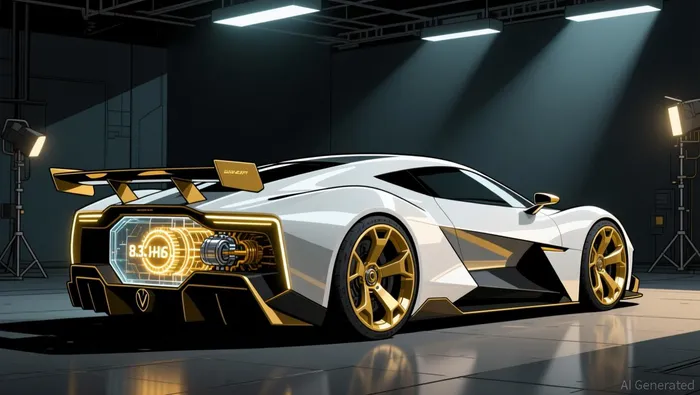
The Tourbillon's production trajectory will be the first real-world measure of Rimac's operational control. The 8.3-liter V16 hybrid powertrain represents a fundamental technological pivot 8.3-liter V16 hybrid, and scaling production while maintaining the quality standards Bugatti's customer base expects will test the joint venture's manufacturing capabilities. Any delays or quality issues in the early production run would signal vulnerability in the transition.
Financially, hypercar development is extraordinarily capital-intensive. The consortium's ability to fund the Tourbillon ramp and subsequent models without Porsche's balance sheet backing becomes critical. Porsche's own financial strain is evident-profits collapsed 92.7% in 2025 profits collapsed 92.7% in 2025, which partly motivated the divestiture. The question is whether the New York-based HOF Capital and Abu Dhabi's BlueFive Capital can sustain the investment pace Bugatti's roadmap demands.
The engineering relationship with Porsche will inevitably change. While the 2021 joint venture already positioned Rimac with majority control Rimac has owned the rest, formal Porsche ownership provided a structural channel for technical collaboration. Without that equity tie, Bugatti must now negotiate access to Porsche's resources on a project basis. This could slow development cycles or increase costs.
History offers a relevant parallel. When Aston Martin broke from Ford in 2007, it initially struggled with resource constraints before finding stability under new ownership. The transition period created uncertainty that affected product planning and dealer confidence. Bugatti's situation differs in scale and market position, but the pattern-initial strain followed by either stabilization or deterioration-provides a structural template for what to watch.
The catalysts that could strengthen Bugatti's position are equally tangible. If the Tourbillon launches on schedule with strong customer uptake, it validates Rimac's independent leadership. If the consortium demonstrates deep pockets and long-term commitment, it could attract talent and partnerships previously tied to Volkswagen's ecosystem. The key risk is a prolonged transition period where product momentum stalls.
For now, the transition creates a window of uncertainty. Customers waiting for the Tourbillon, suppliers negotiating long-term contracts, and employees navigating the new ownership structure all face near-term ambiguity. The next 12-18 months will determine whether this break from Volkswagen becomes a liberating transformation or a costly disruption.