Market Ready to Breakout and Strengthen the Bullish Cycle, but Gold Is Showing Growing Anxiety
The stock market is set to push toward fresh highs as optimism builds around a potential long term U.S. Iran agreement, easing concerns surrounding oil driven inflation and supporting the case for a technical breakout. If that scenario unfolds, investors could see renewed strength in the current bullish cycle, especially as earnings uncertainty has largely concluded and the incoming Fed leadership is unlikely to rush toward rate hikes, while potentially reconsidering the easing path. That creates an environment supportive of risk assets and momentum driven trades. However, gold is beginning to flash warning signs that investors should not ignore. Here is what markets may be signaling next.
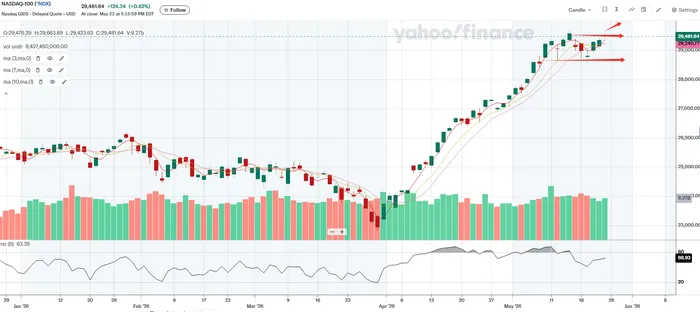
Both the S&P 500 and Nasdaq 100 sat only slightly below previous highs and resumed their upward trend after a brief consolidation period. The MA3 above MA7 and MA10 structure remains intact, with both indices also closing above MA3, reinforcing bullish momentum. RSI readings remain elevated but not yet at levels suggesting excessive optimism. The next key point to monitor is whether the market can close decisively above prior highs. If that occurs, it would strengthen the breakout thesis and reinforce confidence in the broader outlook. The Dow Jones Industrial Average has already achieved fresh highs. If the S&P 500 and Nasdaq 100 follow, then a broad market breakout becomes the base case.
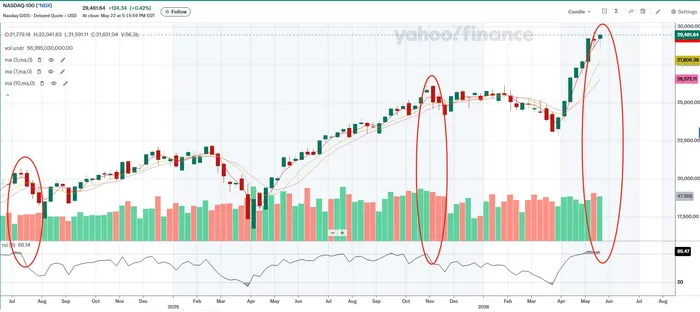
At the same time, investors should remain aware that weekly technical conditions remain stretched. Momentum remains strong, but markets may still need time to absorb recent gains. The Nasdaq 100 weekly RSI remains above 85, extending a streak of four consecutive weeks above the 80 level, fueled by AI enthusiasm and resilient fundamentals. Historical comparisons suggest caution. The last time weekly RSI moved above 80, the index declined roughly 3% the following week before resuming its advance. That does not necessarily imply a major reversal. The current breakout appears more structurally supported, and any pullback on a weekly basis could represent a normal consolidation phase rather than a breakdown. Investors should avoid overreacting to short term weakness if broader trends remain intact.
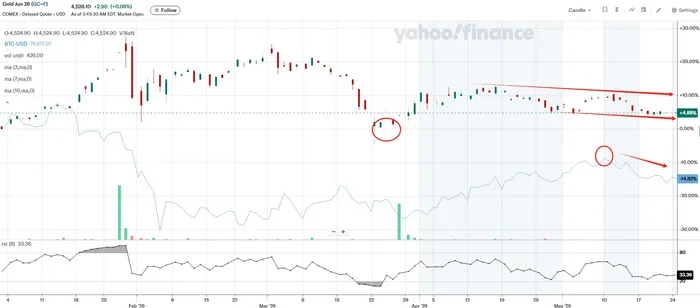
Some caution is also emerging across crypto and precious metals. Bitcoin reached session highs near $83,000 on May 6 but has struggled to follow equities toward fresh highs, facing renewed selling pressure before stabilizing recently. The divergence between crypto and the broader market has become increasingly noticeable. While stocks continue attracting capital flows, crypto appears to be consolidating rather than confirming the same level of conviction.
Gold deserves even closer attention. Despite expectations that incoming Federal Reserve Chair Kevin Warsh could favor a more accommodative stance aligned with President Trump's preference for lower rates, gold has failed to respond positively. Instead, technical conditions show a developing "lower high and lower low" pattern. There are several reasons investors may remain cautious toward gold in the short term.
First, even if leadership changes at the Fed, the broader committee remains data dependent and likely to maintain a wait and see approach until inflation moves materially lower. That limits how aggressively policy direction can shift in the near term. Second, Warsh may favor balancing lower rates alongside balance sheet adjustments, which could partially offset easing through tighter liquidity conditions. Such a combination may not immediately support precious metals.
The market currently has limited visibility into how future monetary policy could evolve under new leadership. That uncertainty itself introduces potential volatility. If investors begin questioning policy stability or timing around easing expectations, gold's recent weakness could become a signal rather than noise. In previous cycles, precious metals have often responded earlier than broader markets to shifts in liquidity expectations and macro stress.
In conclusion, the market remains positioned for further upside as technical momentum strengthens and geopolitical concerns begin fading into the background. A breakout above prior highs would reinforce the bullish case and potentially extend the current rally. However, investors should not ignore cross asset signals. Weekly technical conditions remain stretched, Bitcoin is not fully confirming the equity strength, and gold is beginning to diverge despite a seemingly supportive backdrop. That combination suggests optimism remains justified, but positioning should remain disciplined. The long term bullish structure still holds, yet markets rarely move higher in a straight line. Short term volatility and consolidation could emerge as sentiment resets, creating opportunities for investors who remain patient and focused on the broader trend.