Fresh Factory's 17% Revenue Growth Looks Good-But a 5-Point Margin Slide Is the Real Q1 Test
Record revenue masked a transition-era margin squeeze
The Fresh Factory posted record billed revenue of $12.5 million, up 17% year over year. That is the clean bull case: demand held up while the company started operating out of its newer Chicago space.
The harder issue was profitability. Achieving a positive EBITDA of $0.3 million, the company withstood increased costs from its new manufacturing facility, and management said Q1 included incremental ramp-up costs plus higher facility and utility expenses during the transition. In other words, this was not a normal quarter. It was a bridge quarter.
The key question for investors is whether the Chicago retrofit produces a larger revenue base that can absorb those fixed costs. If it does, Q1 will look like a costly but temporary setup phase. If not, the market may keep treating every growth headline with skepticism.
Capacity and output improved even as margins compressed
The new Chicago site increased real production
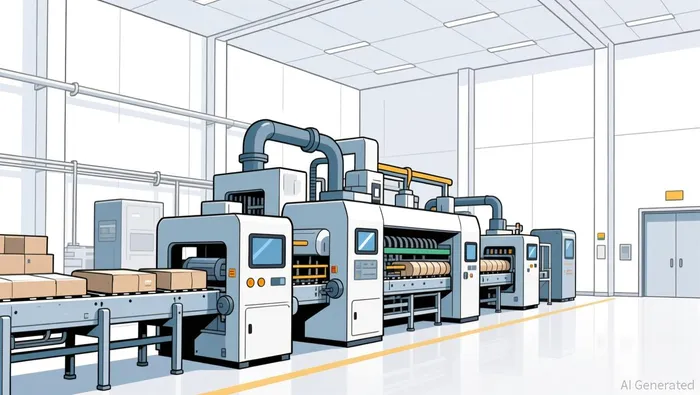
Q1 was not only about preserving growth. The company also produced 47.5% more packaged units while operating from its newly leased 154,000-square-foot manufacturing facility. That matters because Fresh Factory is a contract manufacturer for fresh, clean-label, and better-for-you food and beverage brands, where flexibility, formulation support, and food safety matter alongside cost.
A bigger facility only helps if client demand keeps flowing through it. The unit-growth figure suggests the bottleneck is getting larger, not that demand has weakened.
Funding gave the transition more time
Fresh Factory also strengthened its balance sheet with a $3.0M ($4.3M) private placement in January 2026. That does not solve the margin issue by itself, but it gives management more time for the new site to settle in without forcing growth decisions out of short-term cash pressure.
Demand was already strong before this quarter's transition costs faded
The broader backdrop still matters. In 2025, Fresh Factory posted record annual billed revenue of $45.1M, up 37% from 2024, while EBITDA rose 225% year over year. That does not erase Q1's margin pressure, but it does support the idea that the company had real demand entering the move.
What to watch next: - whether packaged-unit growth continues alongside revenue growth - whether margins stabilize or improve as the new site ramps - whether the stronger balance sheet supports working capital rather than just funding the transition
The debate is transition pain or a higher permanent cost base
The bull case: the business stayed profitable during the move
Bulls can point to the fact that Fresh Factory still generated positive EBITDA of $0.3 million and adjusted EBITDA of $0.5 million while commencing operations in Chicago. That suggests the quarter was messy, not broken.
If the market sees the move as a temporary disruption, the focus shifts from one quarter of compression to whether the larger site can spread fixed costs across more revenue and more output over time.
The bear case: profitability still worsened
Bears focus on the fact that a net loss of $0.9 million was observed, mainly due to higher operational expenses and transition costs. That is a useful reality check. Higher revenue and more units produced do not fully offset a weaker income statement if the new cost base stays elevated.
The bear thesis is not that demand disappeared. It is that the bigger facility may now carry too much fixed cost for the current revenue base. If that happens, Q1 was not a one-off bruise; it was an early signal of a less forgiving profit structure.
The next few quarters should separate ramp pain from structural trouble
The clearest tests are straightforward: - does revenue rise enough to fill the new space and phase out the old facility's leftover costs? - does adjusted EBITDA hold or improve from here? - does net income move back toward break-even as transition costs fade?
If those indicators improve, the market can start treating this as a successful expansion. If not, the margin squeeze may become the new normal.
What would confirm the story-and what would break it
The next few quarters matter because management says the retrofit and commencement of operations are now behind the company. If that is true, the market should stop treating Q1 as a special case after one more update.
Signals that the setup is working
- billed revenue remains strong as the new site operates normally
- margins move back toward the 40%+ range
- packaged-unit growth continues
- losses narrow and profitability improves
Signals that the story is weakening
- revenue cools after the move
- output growth stalls despite extra capacity
- margins stay compressed once the transition should be mostly over
- the company needs additional capital too soon
For now, Fresh Factory still looks like a "show me" story. The growth headline is real, but the investment case depends on whether margins recover after the Chicago transition.