$BRN: The RSU Correction Nobody Asked For - And the Valuation Disconnect That Actually Matters
BrainChip Holdings has corrected RSU issuance figures in an updated ASX filing, re-aligning its reported numbers with the actual share register. The kind of paperwork fix that makes headlines for small-cap watchers but tells you nothing about whether the stock is worth owning.
The correction is about disclosure. The real story is about dilution, runway, and a stock priced like the future is already won.
Here's what actually matters:
1. The RSU count is a symptom, not the disease.
CEO Sean Hehir saw his RSU (restricted stock unit - essentially deferred shares that vest over time) holdings increase by 5.7 million in May 2026, bringing his total to 15.4 million units. That was granted right after the AGM on May 7, where shareholders approved all resolutions, including equity-based compensation. On a company with roughly 54 million diluted shares outstanding, 15.4 million RSUs sitting in one person's name is not alignment. It's concentration.
The correction filing adjusts the count. It doesn't adjust the dilution.
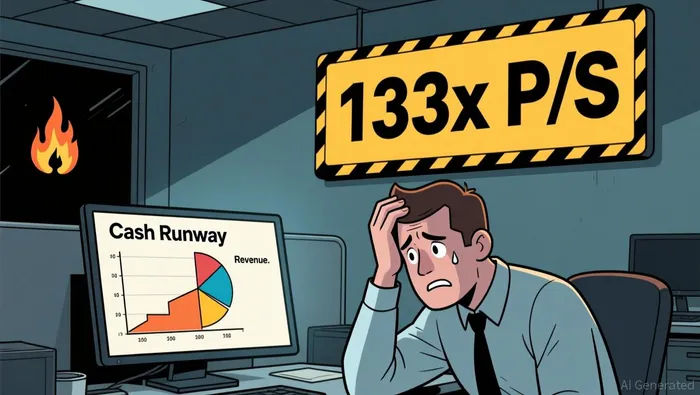
2. BrainChip trades at 133x trailing revenue. That is not a startup discount. That is a narrative premium with no earnings floor.
At A$0.165-0.178 per share, the market cap sits around A$300 million. BrainChip's full-year revenue is measured in the low single-digit millions - roughly $1.9 million. The stock trades at over 133 times what the company actually brings in. For comparison, most AI infrastructure names with real revenue and contracted backlogs trade below 15x.
The market is pricing in a future where the AKD1500 neuromorphic chip becomes an edge AI standard. The math doesn't require that to be true to say this is expensive.
3. Cash runway is the clock ticking on the thesis.
As of December 2025, BrainChip held approximately US$32 million in cash with no debt. Cash burn was US$15 million over the trailing twelve months - roughly 4.7 quarters of runway. That was two months ago. Add in that the company committed to raising a minimum of A$20 million by June 30, 2026, and the dilution question compounds: if the raise comes via equity, each existing share gets thinner.
A company can't burn $3.8 million a quarter on the premise that the market will keep extending a 133x P/S multiple. Eventually one number has to come down.
4. Volume production of the AKD1500 is real. Revenue conversion is not.
BrainChip announced the start of volume production for its AKD1500 neuromorphic edge AI accelerator in November 2025. The company has secured $25 million in funding to support commercialization and unveiled software partner ecosystem expansions. Product development is legitimate.
The question Wall Street isn't asking loudly enough: how much of that production converts to revenue on the timescale the cash runway demands? The company reported customer cash inflows of US$0.7 million last quarter, improved from US$0.4 million prior. That's directionally right. It's not enough to meaningfully dent a $15 million annual burn.
5. The bear case doesn't require the chip to fail. It just requires it to take longer.
The most common bear narrative - "neuromorphic computing won't win" - is too strong. The chip doesn't need to fail for the stock to be at risk. It just needs to reach meaningful revenue scale later than the current price implies. At 133x trailing revenue, the stock is pricing in multi-year commercial success starting now. That's a timeline bet, not a technology bet.
The break condition.
This setup improves only if BrainChip demonstrates accelerating revenue that changes the burn-to-revenue ratio, or if a large strategic partnership converts the IP model into predictable contracted income. Until then, the stock is a narrative play priced for perfection, with a cash runway that doesn't support the valuation.
At over 133 times trailing revenue with a runway measured in quarters, the stock doesn't price in execution risk. It prices it at zero.
Break condition to watch: Quarterly revenue exceeding $1 million consistently would start closing the gap between cash burn and cash generation. Below that, dilution keeps extending the runway and compressing the per-share value. The math, not the filing correction, determines where this ends.