60 Economies, One Tariff Risk: Why the Forced-Labor Section 301 Push Matters for Portfolios Now
Section 301 has turned forced-labor enforcement into a broad tariff risk
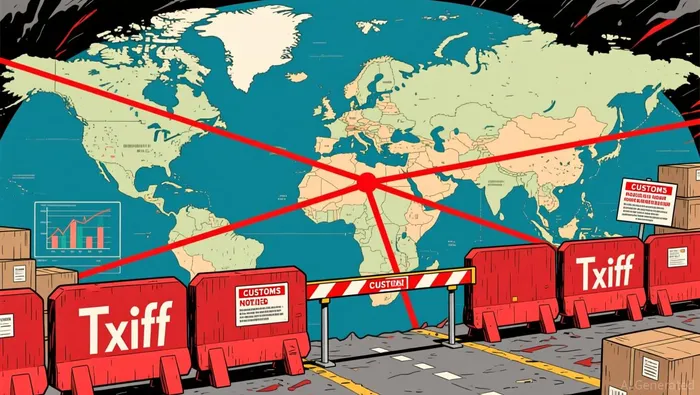
This is a portfolio-wide tariff setup, not just a human-rights headline. USTR has opened Section 301(b) investigations covering 60 economies that together represent 99% of all U.S. imports. The key distinction is procedural: these are investigations, not final tariffs. Under Section 301(b), USTR must first determine whether each economy's failure to ban forced-labor goods is unreasonable or discriminatory and whether it burdens U.S. commerce before any tariff action follows. Even so, the signal matters now because the scope of exposure is already broad.
Why the exposure is broad
After the Supreme Court ended the use of IEEPA for across-the-board tariffs, Section 301 has become a central vehicle for rebuilding tariff authority. USTR has used it to target 60 economies in forced-labor inquiries, with separate capacity-related investigations also running across many of the same trading partners. If the administrative process moves forward, this could become a main path to broader tariff action. That is why the story matters beyond compliance circles: it can affect supply chains, input costs, and cross-border earnings.
The practical takeaway is simple: once the investigation net covers nearly all U.S. imports, broad-based correlation risk rises. For portfolio allocation, the hedge is not a single-sector trade. It is reducing exposure in assets that are most vulnerable to tariff-driven cost increases, sourcing disruption, or weak pass-through.
How the policy signal can reach earnings
The more useful question is not whether investors have heard the headline. It is how quickly a policy signal turns into earnings pressure.
From investigation to income-statement impact
The transmission path is fairly mechanical. Section 301(b) asks whether a trading partner's forced-labor enforcement is unreasonable or discriminatory and whether these practices burden or restrict U.S. commerce. If USTR makes those findings, the president may impose tariffs or other trade restrictions. But tariffs are only the final step. Even before that, investors should model detention risk, customs holds, and the cost of proving origin. The legal baseline is not new: the U.S. has banned imports of goods produced with forced labor since 1930, and enforcement tightened after Congress removed the prior exception in 2015. That matters because more shipments could be held, inspected, or diverted as scrutiny broadens.
The near-term catalyst is the administrative calendar. USTR has scheduled public hearings for April 2026 and set April 2026 deadlines for participation. That is why the window is now: companies that map exposure, submit comments, and strengthen sourcing documentation can influence both process and outcome.
Where margin pressure shows up first
This is not just a legal issue. It is an operating-cost issue. If enforcement tightens, the first hits are likely to be:
- Compliance spend: supply-chain mapping, supplier audits, certificates of origin, and legal support.
- Working capital: detained cargo ties up inventory and delays revenue recognition.
- Sourcing friction: alternative suppliers may carry higher unit costs or longer lead times.
- Tariff pass-through: if duties land, companies with weak pricing power may see gross margin compression before revenue rerates.
Bears argue this remains a niche compliance risk and that the process could be narrow or slow. But the counterpoint is that layered enforcement can hit the same goods under UFLPA, CBP actions, and new Section 301 tariffs, raising the risk of compounding disruption rather than a one-off ruling.
Sectors and watchpoints
High-risk exposure is likely concentrated where sourcing is dense and substitution is slow. Watch:
- electronics and semiconductors
- solar and clean-tech hardware
- pharmaceuticals and medical devices
- textiles, apparel, and footwear
- automotive and industrial components that rely on multi-tier inputs
For portfolios, valuation sensitivity matters. Companies with strong pricing power and sturdier balance sheets can absorb this better. Those with thin margins, long supplier bases, and limited visibility into tier-2 or tier-3 inputs are more exposed to earnings misses and multiple compression.
Portfolio positioning: hedge the policy path, not the headline
With Section 301(b) investigations of 60 economies focused on forced-labor import enforcement, this looks less like a niche compliance story and more like a potential common factor in earnings volatility. In portfolio terms, the goal is to cut tariff beta where supply chains are complex, margins are thin, and pricing power is weak.
Positioning buckets
Favor:
- Quality balance-sheet names that can absorb compliance spend, customs delays, and sourcing changes without damaging returns on capital.
- Domestic or nearshore revenue exposure, where earnings are less tied to the same cross-border input flows now under policy scrutiny.
- Firms with visible supply-chain controls, because the process rewards companies that can document sourcing and help shape the record assess exposure and influence outcomes.
Be cautious on:
- Import-heavy discretionary businesses, where tariff pass-through is harder if demand softens.
- Low-margin textiles and apparel names, which sit in segments already exposed to forced-labor enforcement; layered enforcement can compound cost and disruption.
- Weak disclosers, because opaque tier-2 and tier-3 sourcing raises the odds of surprise margin hits from detention, diversion, or duty exposure.
Catalyst watchpoints
The next move is calendar-driven. USTR accepted written input through April 15, 2026, and public hearings were scheduled for April 2026. The key signal is not rhetoric. It is whether industry pushback narrows the record and any eventual remedy. Companies that participated in the USTR process may have a better view of how broad the final exposure becomes.
When the hedge becomes drag
Critics argue the probe may become a new pretext for re-imposing tariffs. If that happens, correlation risk broadens quickly. But the invalidation case is also clear: if the process stays symbolic, produces narrow remedies, or remains confined to high-risk sectors, tariff beta may stay contained and early de-risking can become a drag on risk-adjusted return.