60 Economies Under New U.S. Tariff Probe: Supply-Chain Risk Is About to Reprice
The probe now covers nearly all of U.S. import exposure
The tariff landscape has broadened again. After the Supreme Court's February 20 decision ending the use of IEEPA for across-the-board tariffs, the administration turned to Section 301 as its main route back to broad tariff authority. USTR's forced-labor probes now cover 60 US trade partners that accounted for 99% of all goods imported in 2024. That makes this a broad trade-policy shock, not a niche dispute.
Why investors could misread the timing
Bulls can plausibly argue this is mainly leverage. The goal is to push trading partners to strengthen, adopt, and enforce their own forced labor prohibitions, not necessarily to trigger wide tariffs immediately. That is a credible near-term read, because Section 301 requires a formal investigative process before any final action.
Bears have the more actionable near-term view. Section 301 lets the U.S. levy tariffs without additional congressional authorization, so even a probe covering nearly all U.S. import sources can move pricing, sourcing plans, and sentiment before any final duty is announced.
The portfolio implication is straightforward: tariff exposure now correlates directly with forced-labor risk in supply chains. What used to sit mostly in compliance can now hit margins, force sourcing redesign, and increase correlation across positions that previously looked unrelated.
Why this can move from process to price
The setup is no longer just procedural. The legal pipeline already allows this to move from policy inquiry to price discovery. The U.S. has had a prohibition on imports of goods produced wholly or in part with forced labor since 1930. For most of that time, the rule was muted because Congress included a consumptive-demand exception. Congress removed that exception in 2015, and enforcement has tightened since then through CBP tools such as Withhold Release Orders and Findings.
From statute to landed cost
The current mechanism is broader than many investors assume. USTR is examining whether each economy's failure to ban and enforce forced-labor imports is unreasonable or discriminatory. If the administration makes affirmative findings, Section 301 can lead to tariffs or other trade restrictions without additional congressional approval. That matters because portfolio managers do not need a new legislative fight to see margin pressure; they need an administrative decision that can change landed costs, sourcing rules, and inventory behavior.
Why the market may understate the disruption
The commercial driver is not only moral or political. Officials argue forced labor creates an artificial cost advantage. That suggests a broader price distortion, not just a compliance nuisance.
The market may also underestimate how physical the disruption can become. CBP already enforces forced-labor law through Withhold Release Orders and Findings. Those actions can hold shipments at the border, force buyers to prove supply-chain cleanliness, and push working capital into safety stock while sourcing is rerouted.
Where the repricing may concentrate
The risk is no longer just sector-specific; it has shifted from shipment-level enforcement to potential country-wide tariffs. That makes the right screen broader than sector alone. The key filters are supply-chain transparency, sourcing diversification, and pricing power.
For investors, the likely pain points are:
- Margin compression first, because short-term bottlenecks are often absorbed before suppliers can be requalified.
- Higher cross-sector correlation, because layered supply chains can turn one enforcement tightening into a broad input-cost shock.
- Cash-conversion drag, because border holds and extra due diligence can distort inventory turns before they show up as a discrete expense.
Bulls will argue the process will narrow before it reaches broad tariffs. Possible. But the more actionable portfolio view is that the administrative clock is already running, and waiting for the final announcement may mean waiting until the cost is already in the numbers.
Portfolio positioning: favor resilience, hedge sourcing concentration
The portfolio move is selective, not blanket. The risk has shifted from shipment-level enforcement to potential country-wide tariffs, so the right screen is no longer sector alone. It is supply-chain transparency, sourcing diversification, and pricing power. You do not need an economy-wide tariff shock to hurt risk-adjusted returns; you only need higher policy beta in the names most exposed to import intensity.
Favor resilience first
Overweight businesses that can show multi-country sourcing, supplier qualification, and enough bargaining power to redesign sources or pass through costs before margins break. These companies may still carry import exposure, but they are better placed to contain drawdowns if the administrative record expands beyond today's headline scope.
In portfolio terms, the goal is to reduce unobserved correlation. As tariff exposure now correlates directly with forced labor risk in supply chains, a compliance issue can quickly become a common factor across positions that previously looked unlinked.
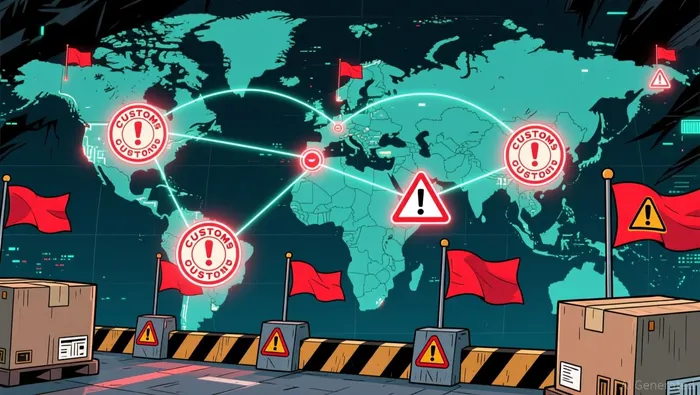
Hedge the sourcing beta
Underweight or hedge the concentrated-risk bucket: firms with sourcing concentration, weak pricing power, and tight working capital. That is where a border hold, supplier audit, or duty escalation can hit gross margin first, slow inventory turns, and arrive before management can negotiate a fix.
The key danger is stacked exposure. Companies may face simultaneous pressure from existing customs tools and a broader Section 301 regime, because layered enforcement will compound cost and disruption. That does not require a short thesis on its own. It is enough to reduce sizing, add protection, or avoid owning the same shock through multiple names.
What would limit the shock
If outcomes stay diplomatic, non-tariff, or targeted, the shock should remain more contained. That is the clearest invalidation signal, because Section 301 requires a formal investigative process, which tends to narrow scope rather than impose an instant economy-wide shock. Congress removed the consumptive-demand exception in 2015, showing that enforcement has been evolving over time, not suddenly turning economy-wide overnight.
The edge is to spot rising forced-labor-to-tariff correlation before the market fully reprices it, because tariff exposure now correlates directly with forced-labor risk in supply chains.