60 Economies in Crosshairs: Why This Forced-Labor Tariff Probe Is a Market Warning, Not a Headline
This is primarily a tariff process, not just a human-rights story
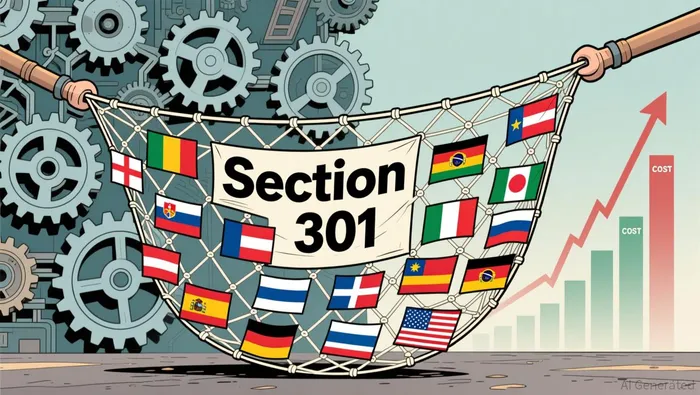
The USTR is probing 60 US trade partners - the economies that accounted for 99% of all goods imported in 2024 - under Section 301 to determine whether each country has laws prohibit the importation of goods made with forced labor and whether those rules are adequately enforced. Crucially, the inquiry is not about whether a country relies on forced labor in domestic production. If findings are affirmative, the process can unlock tariffs and other trade restrictions, or create leverage for negotiations. That is why the market should treat this as a tariff setup first and a human-rights story second.
Bulls will argue this is mostly leverage, not an immediate shock. That is plausible. But the near-term market risk still looks broader than the headline suggests. When 60 of the largest trading partners are in scope, "targeted" starts to look like blanket risk. The pressure is already visible in the current tariff stack: new Section 122 and Section 232 tariffs are estimated to add about $700 in 2026 per household. Adding another inquiry covering almost the entire U.S. goods inflow increases the odds of margin pressure before any reshoring benefit shows up.
The process is already moving. Written comments for both sets of investigations are due by April 15, 2026, and the hearings began April 28 and 29.
Breadth matters more than rhetoric: how policy becomes a margin problem
The key shift is mechanical. When a policy net is this wide, the first impact is less likely to be a clean reshoring story than higher compliance costs, customs friction, procurement rework, and weaker gross margin.
Why supply chains feel this first
With 60 organizations and individuals signed up to testify and more than 450 comments filed, the record is starting to show how complex these supply chains really are. Firms cannot simply switch to domestic suppliers on command. A more realistic near-term path is higher working capital, more inventory buffering, slower freight turns, and product-mix pressure.
The tax burden is already material. The pre-substitution average effective tariff rate is now 11.8%, the highest since the early 1940s excluding 2025, and modeling points to a 0.5%–0.7% price-level impact once effects flow through. That makes earnings commentary worth reading carefully. If management talks about absorption, inventory cleanup, and delayed price increases, gross margin is likely taking the hit first. If prices are passed through, the debate shifts to volume elasticity and market share.
Unfair foreign advantage or a broader tax on U.S. demand?
Bulls can reasonably echo the administration's framing that this is about foreign producers who may have an artificial cost advantage from forced labor. That is the clearest case for the policy: tariffs as a response to unfair competition.
Bears make a different point. When 60 of the largest trading partners are in scope, the effect can look less like a surgical correction and more like a broader tax on U.S. demand. In that scenario, investors should not assume clean substitution. They should also watch for lower returns on imported input categories, higher logistics and classification costs, and more pressure in categories where sourcing is fragmented and alternatives are thin.
That risk is amplified because this probe is not isolated. It runs alongside overcapacity investigations under Section 301 and sits on top of existing Section 122 and Section 232 tariffs. Overlapping tools increase the chance that some product flows face multiple tariff layers.
What to watch in company commentary
- Gross margin, not just revenue guidance, is likely to show the first pressure.
- Inventory and working-capital commentary can signal customs delays and supplier re-qualification.
- Supplier-concentration language matters because less diversification usually means less pricing power.
- Whether new tariffs stack rather than replace older ones determines whether this becomes an earnings-cycle issue.
What the process signals say more than the headlines
One useful bridge is to focus on process, not press-release noise.
The docket is the early signal
Watch who files and what industries are represented. The USTR record already includes 60 organizations and individuals signed up to testify and over 450 comments. If testimony clusters in a few industries, those are the chains with the least room to absorb duty, customs delay, or supplier re-qualification.
If the inquiry keeps being framed around disadvantaged U.S. workers and exporters, that is a stronger signal than advocacy messaging because it points toward remedies that could help import-substitute sectors rather than simply compressing margins everywhere.
The key distinction is narrow versus universal action. The process was launched to assess whether each partner's rules burden or restrict US commerce, and affirmative findings would allow tariffs and other trade restrictions. If the final outcome stays targeted, the market can rotate with some control. If it goes broad, the tax effect arrives faster than any reshoring payoff.
Why the macro backdrop matters
This is not just a trade story. The current tariff stack is already estimated to add $700 in 2026 per household, and the broader price-level impact is 0.5%–0.7%. If final action widens the burden, slower disinflation becomes more than a headline risk. That can matter for rate-sensitive valuations and for businesses with heavy import exposure.
What would change the read
A less negative read would require at least one of the following:
- narrow final action
- broad exemptions
- a falling pre-substitution average effective tariff rate
Until then, the main watchpoint is simple: who files, what they say about sourcing, and whether the record points to concentrated pain in specific supply chains before the market fully prices it.