Philippine SEC Director Arrest for Extortion: Why the Corruption Panic Is Creating a Market Disconnect
An SEC director in the Philippines was arrested for extorting funds from a private corporation. The headline reads like a governance disaster. In an ironic twist, it's the kind of news that creates the exact dislocation this market has been screaming about - quality businesses selling off alongside the worst actors, while a reform agenda is actually moving forward.
The narrative is "corruption is structural in the Philippines." The story is blue-chip equities trading at single-digit multiples after a governance-driven panic, with a new SEC chair who was literally the former stock exchange CEO now pushing through the reforms the market says can't happen.
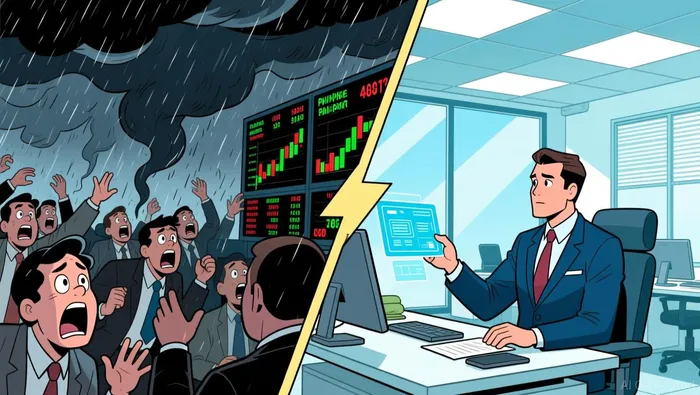
Here's the setup:
1. The selloff was political, not fundamental. In October 2025, a corruption scandal tied to government flood control projects wiped out ₱1.7 trillion (≈ $28.8B) in market wealth off the Philippine Stock Exchange. The PSEi has dropped by 20% in just weeks, making it the worst performer among global benchmark indices. But this wasn't an earnings problem. It was a trust problem. Foreign investors fled. Net foreign direct investment fell 31% year-over-year to $0.6 billion in February 2026. Short-term capital exited in January. The market was punished for the conduct of people who have nothing to do with corporate balance sheets.
2. The valuation disconnect is real. The PSEi closes at 5799.32 on June 1, 2026 - below the 6,000 level it broke in late September 2025 amid the scandal. But look at what you can buy inside that index. BDO Unibank, the Philippines' second-largest bank, is trading at approximately 8.3x earnings when its 5-year average P/E sits around 10x. That's not a bank facing a credit crisis - that's a bank being punished for a government scandal it had nothing to do with. Blue-chip conglomerates, the very companies that survived the corruption era, are trading like the business model itself is broken. It's not.
3. The reform catalyst is already in motion. President Marcos appointed Francis Lim as SEC chair - a corporate lawyer and the former CEO of the Philippine Stock Exchange itself. Lim isn't a political appointee learning the job; he drove capital market reforms in his previous role and has spent his tenure so far pushing digitization, tighter enforcement, and measures to restore investor confidence. The SEC under his leadership has been institutionalizing valuation disclosure reforms and tackling vested interests that have long complicated Philippine markets. One of the first signs: the SEC itself cracked down on the very problem the arrest highlights. The body publicly confirmed the director's arrest and distanced itself from the conduct - the sort of institutional self-correction that only works when leadership actually wants the perception problem to end.
4. The market is starting to stabilize, not implode. After the October 2025 panic, the PSEi found a floor. Trading has been range-bound between roughly 5,700 and 6,100 for months. The January 2026 selloff of foreign funds was sharp but short-lived. The market that was expected to spiral didn't. Several analysts are targeting 7,000 for the PSEi in 2026, driven by falling interest rates, regulatory reforms, and a steadier macro backdrop. That's a 20%+ re-rating from current levels.
5. The institutional weakness argument is real - but it's also the discount. RBC Global Asset Management published a note June 1, 2026, calling out weak institutions, such as the central bank, credit bureau and stock exchange as barriers to reform. That's accurate. The problem is, that assessment is exactly why the market is cheap. You don't get 8x earnings on Philippine banks because the fundamentals are terrible. You get it because institutional risk is being priced in at maximum discount.
The risk is straightforward: if governance reforms stall, or if more corruption exposures surface that hit actual listed companies rather than government projects, the discount widens further. A major economic downturn would compound the governance problem with credit losses.
But the setup is clear. The market is treating a governance cleanup as permanent damage. The SEC director arrest is proof the system is working, not breaking - the regulator caught its own. The new chair has a mandate and a track record. And the stocks that survived all of it are priced like they won't make it through the next six months.
BDO at 8.3x earnings when its history runs 10x. The PSEi at 5,800, with a 7,000 target on reform and rate cuts. If Lim executes even half of what he's promised, the re-rating doesn't need perfection - it needs the market to stop pricing the worst-case scenario on companies that had nothing to do with the scandal in the first place.