The VYM vs HDV Debate Has the Wrong Premise
The usual framing on this comparison asks whether you want higher yield or broader diversification. It's a clean choice, the kind that makes a neat chart. The problem is the chart is built on a false premise.
VYM currently yields about 3.8 percent. HDV yields about 2.9 percent. VYM is the higher-yielding fund. HDV is the more concentrated one. So neither column of the usual debate is actually true.
Let's talk about what's actually producing the income instead.
VYM tracks roughly 440 U.S. dividend-paying stocks. Its top 10 holdings account for about 25.5 percent of the fund. Broadcom alone sits at 8 percent, with JPMorgan Chase, Exxon, and Johnson & Johnson rounding out the list. The portfolio tilts toward consumer staples, energy, and industrials. You're getting a broad dividend slice of the market, with Vanguard's usual low cost - an adjusted expense ratio of 0.04 percent.
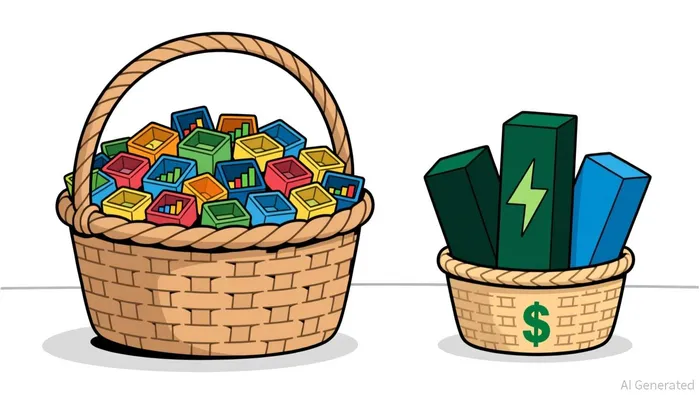
HDV looks different. About 75 holdings, but 51 percent of the fund's assets are crammed into the top 10 names. Exxon Mobil at 10.3 percent. Chevron at 7.4 percent. Between those two, nearly 18 percent of your position lives in two energy companies. Financials run 27.7 percent. Healthcare adds another 23 percent. Three sectors own your entire portfolio. HDV's expense ratio is 0.08 percent - twice what VYM charges.
Here's what that concentration does to your income stream. When the payout comes from 75 companies where half the money is tied to a handful of them, you don't have diversification. You have a sector bet wearing a dividend costume. If energy earnings turn, or financial credit costs rise, or healthcare faces margin pressure, the income question isn't theoretical - it's immediate.
VYM's broader structure means no single stock failure or sector downturn reshapes your cash flow. The tradeoff isn't between yield and diversification. The tradeoff is between a genuinely diversified income basket and a concentrated one that happens to carry the label of a "high dividend" fund.
Both funds are up roughly 11 percent year-to-date, which tracks the broader market rally and tells us neither has a structural advantage in price appreciation right now. HDV trades at about 22 times earnings, which is not cheap for a fund that derives its character from energy and financial stocks - sectors that have historically run at lower multiples.
So what should the income investor do?
If you need a single fund to hold a base layer of U.S. dividend exposure, VYM is the better machine. It costs less, yields more, and actually diversifies across hundreds of companies. The income it pays is backed by a wider range of earnings sources, which means when one sector stumbles, your quarterly distribution doesn't wobble.
If you're drawn to HDV because you believe energy and financial stocks will outperform and you want to collect income while waiting, that's a different conversation. But don't sell it to yourself as a diversified dividend play. It's a sector allocation with a coupon.
The real question isn't which fund is "better." It's whether either one earns a place in a portfolio that's supposed to fund life through cash flow, not through hoping a concentrated position in Exxon and Chevron continues to pay up. For the base layer, VYM does the job. For targeted sector exposure, use a tool that is honest about what it is. Both funds work in a diversified income architecture - they just can't both be doing the same job.