When the stablecoin issuer investigates faster than the state
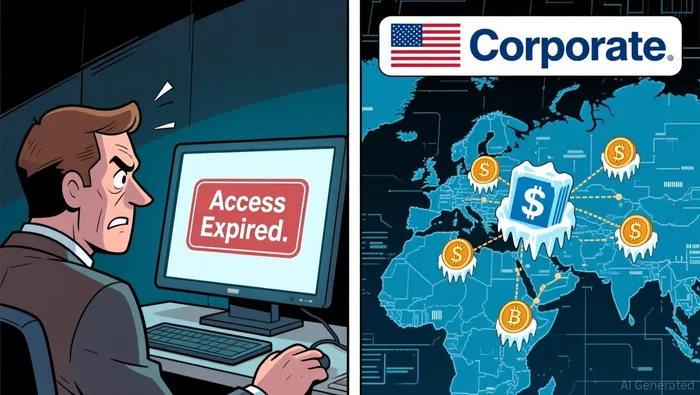
Argentina's anti-corruption investigative unit, UFECI, has been unable to trace the blockchain transactions tied to the $LIBRA token scandal because its crypto tracking software license expired - and it never renewed past the free trial.
It sounds like a bureaucratic punchline. It is something more important than that.
The state can't see the ledger. The company can.
Here's what happened. In February 2025, Argentine President Javier Milei posted a message on X promoting a newly created cryptocurrency called $LIBRA, saying it would help fund small businesses. Within hours, the token's price collapsed. The token had briefly reached a $4.5 billion market cap before crashing, leaving roughly $250 million in losses for retail buyers.
A year later, the official investigation is stalled because the agency assigned to it doesn't have the software to read a public blockchain.
Meanwhile, Circle - the US company that issues the USDC stablecoin - already did the work. In May 2025, after a federal court issued a temporary restraining order, Circle froze two wallet accounts linked to the $LIBRA deployment containing approximately $58 million in USDC. Circle didn't need a subpoena to see where the money moved. It could see it because USDC flows through its own system, and it has the analytics tools built in.
The contrast is the point.
This isn't just a story about a broke government agency. It's about who now holds the practical power to trace, freeze, and investigate crypto transactions - and the answer, increasingly, is not the state.
What this actually tells us about enforcement
Blockchain analytics software - tools like Chainalysis, Elliptic, or the proprietary systems stablecoin issuers run internally - costs money. Subscriptions, licenses, talent. These aren't one-time purchases. They're recurring operational costs for institutions that want to follow on-chain money.
UFECI apparently ran on a free trial and let it lapse. That's the proximate cause. The deeper problem is structural: a sovereign state's investigative apparatus wasn't designed for a financial system where money moves across permissionless ledgers instead of through bank accounts with names on them. Building that capability requires budget lines that didn't exist three years ago, hiring engineers who didn't exist in these roles three years ago, and political will that apparently evaporated when Milei shut down a separate investigative task force he had created just three months earlier.
But the more consequential fact isn't that Argentina is unprepared. It's that Circle already had the answer.
Stablecoin issuers sit at a unique choke point. When money moves in USDC or Tether, the issuer controls the ledger. They can freeze addresses, block transfers, and hand data to regulators - not because blockchain is centralized, but because the stablecoin wrapper is. This is something we keep saying about stablecoins and then forgetting when the moment arrives: they are not bank deposits, but they are closer to bank deposits than to Bitcoin.
Circle freezing $58 million in a foreign jurisdiction's criminal investigation is a quiet demonstration of that architecture. The US company acted on a US court order to freeze funds connected to an Argentine scandal. Argentina can't trace the chain. Circle can, because the money passed through its doors.
What comes next
Argentine politicians are now publicly calling for more resources to be directed to UFECI so the investigation can resume. A congressional commission has already published a report accusing Milei of alleged fraud in connection with the token's promotion. The political fight continues.
But I'm more interested in the plumbing question: how many other countries are in Argentina's position? How many investigative bodies are running on expired software or no software at all? How many crypto-related fraud cases around the world are being solved - or not - depending on whether the money happened to pass through a stablecoin issuer willing to cooperate?
The answer probably leans toward 'a lot.' We've been talking about stablecoins as a payments phenomenon. This episode suggests they're also an enforcement phenomenon. The issuers who control the largest stablecoin ledgers now sit between illegal activity and accountability, and they exercise that position of power whether a given government is equipped to use it or not.
What I don't know yet is whether this dynamic is temporary - a gap that will close as governments catch up - or structural. If it's structural, then the real regulatory question isn't about what rules stablecoin issuers should follow. It's about what happens when a small number of private companies hold more investigative reach than most sovereign states, and whether the world is ready for that transfer of power.
To be honest, I doubt we are. But the ledger doesn't wait.