When the Creditors Become the Capital Raise
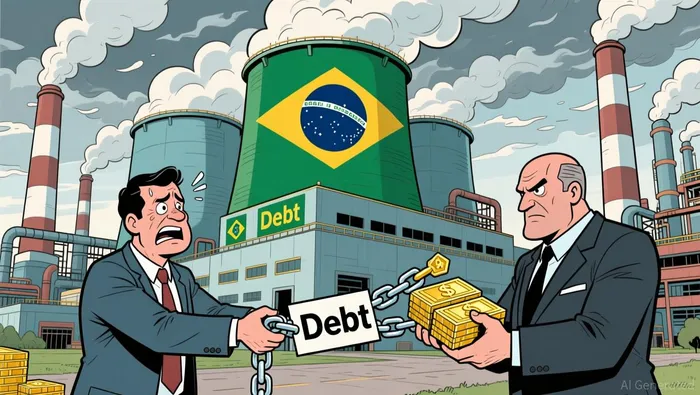
Here is the thing about the Raízen restructuring that the headline doesn't capture: the $12.6 billion deal isn't really a debt restructuring. It's a capital injection that creditors are being asked to fund by force.
Raízen is a 50/50 joint venture between Shell and Cosan, Brazil's largest sugar and ethanol producer. In March 2026, it filed for an out-of-court restructuring of roughly R$65 billion in unsecured debt - the largest of its kind in Brazilian history. By June, it had gathered informal support from a majority of creditors for a plan that does something unusual. The plan converts 45% of the restructured debt into equity at R$0.25 per share. The rest gets pushed out 13 years.
That's a haircut and a maturity extension and a forced equity swap, all in one product. But the real story isn't the product. It's why the product had to look like this.
The parents said no
Before the restructuring plan was ready, creditors asked the thing they always ask in a situation like this: put in fresh equity. They wanted Cosan and Shell to contribute as much as R$25 billion. The two parents - one a global energy major, the other a Brazilian industrial group - couldn't agree on how much to contribute. Those talks collapsed in early March.
Shell eventually committed to around R$3.5 billion, a fraction of what creditors were asking for. Cosan's exact position is murkier. The point isn't the precise number. The point is that the equity sponsors refused to provide the capital that the company needed to survive. So the question became: who else has money, and how do you make them give it?
In practice, the answer was: the bondholders already have money. They just called it something else. They called it debt.
The mechanism
The restructuring plan forces creditors to choose between options. The preferred path is the debt-to-equity swap: 45% of claims become shares at R$0.25 per share, with the remaining debt extended by 13 years.
If you don't choose, the alternative is an 80% haircut on your claim, with a single payment scheduled for March 2047. That's 21 years from now.
Creditors began voting on the plan in early June. The structure of the choice is familiar to anyone who has watched leveraged companies avoid bankruptcy by convincing creditors that the alternative is worse. It's a textbook holdout trap.
Raízen also filed for U.S. bankruptcy court recognition of its Brazilian extrajudicial reorganization in March, which gives the Brazilian proceeding international teeth. If a holdout creditor tries to seize assets through a New York litigation, the company has a cross-border procedural shield. Fitch downgraded Raízen's ratings to 'C' in March, which is just the credit agency's formal way of saying the bond market already knows the recovery rate is going to be decided by this vote, not by a liquidation.
The valuation question
The swap price is R$0.25 per share. That number matters because it sets the implied valuation of the entire company from the creditors' perspective. Converting roughly R$29 billion of debt into equity at that price means the market is being asked to price the company at a level that makes the swap mathematically workable but probably not generous.
The odd thing is not that creditors are taking equity. It's that they're being asked to take it at a price that the company's own equity holders didn't have to defend. Cosan and Shell get to keep their 50/50 split without injecting the R$25 billion that creditors wanted. New equity comes in at R$0.25, which dilutes both parents but doesn't require either one to open their wallets.
The parents' capital commitment problem gets solved by making bondholders into the rescue.
What this actually is
The basic point is this: when equity sponsors refuse to fund a company's survival, the restructuring process finds another way to create equity. Sometimes it's called a debt-to-equity swap. Sometimes it's called a mandatory exchange offer. Sometimes it's called an out-of-court reorganization with a holdout penalty.
The economic reality is the same. The debt holders absorb the losses that the equity holders were supposed to absorb first, because the equity holders are the parents, and the parents walked away from the table.
Brazil's extrajudicial reorganization framework gives Raízen the legal architecture to make this work without a full Chapter 11-style bankruptcy. The 50% creditor threshold, the standstill protections, the U.S. recognition - it's all plumbing designed to keep the machine running while the capital stack gets rearranged.
The judgment is structural, not tactical. Raízen creditors are being asked to solve a problem that belongs to the equity sponsors. Whether the vote passes at a scale that sticks depends on whether enough creditors believe that the 80%/2047 alternative is real rather than theatrical. But the deeper question isn't whether the vote succeeds. It's whether a sugar and ethanol company that can't convince Shell and Cosan to put in $1 billion each deserves to exist as a going concern at all. The restructuring can fix the balance sheet. It can't fix the fact that the people who own the company wouldn't bet their own money on it.