Raizen's $13 Billion Restructuring Is Not a Turnaround - It's an Equity Liquidation
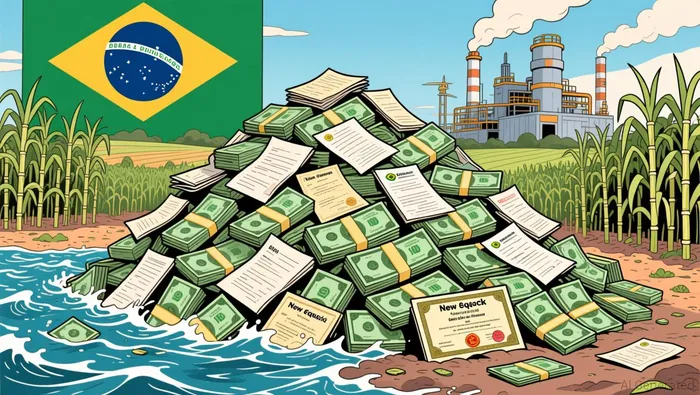
Raízen is converting roughly 45% of its debt into equity - that's about R$29 billion of new shares, enough to dilute existing shareholders so thoroughly that the distinction between "restructuring" and "equity liquidation" starts to blur.
The majority of creditors have agreed to the terms. On that narrow dimension, the deal works. But the market shouldn't read this as a turnaround signal. It should read it as a capital reset - one that raises the question of whether any value is left for the people who held the stock through the collapse.
What the deal actually does
The restructuring covers R$65.4 billion in debt, including debentures, agribusiness receivables certificates (CRAs - Brazil's version of asset-backed debt), and bank loans. Creditors get a menu of options, but the spine of the plan is the debt-to-equity swap. A creditor holding R$100 of Raízen debt would see roughly R$45 converted into new shares, with the remaining R$55 extended - some reports say by as much as 13 years on the longest maturities.
The company also filed a prearranged reorganization case in Brazil on March 11, which triggered an 90-day protection period - shielding Raízen from creditor lawsuits during the negotiation window. That clock expires in early September.
Two fresh capital injections are part of the package. Shell will contribute R$3.5 billion, and Aguassanta - the private equity firm that controls Cosan, Raízen's co-owner - is adding R$4 billion. Together, that's R$7.5 billion of new equity money.
Put plainly: R$29 billion in debt becoming equity, plus R$7.5 billion in fresh capital. The existing share count is going to look like a rounding error.
Why this wasn't avoidable
Raízen didn't wake up one day and decide it needed R$65 billion in debt restructuring. The company has been deteriorating for months - and then quarters.
In Q3 of the 2025/26 crop year, Raízen posted a net loss of R$15.6 billion. That's not a cyclical soft patch. That's a company whose cost structure has run past what its revenue can support. The losses came from a combination of heavy capital expenditures - the company has been aggressively expanding its 35 sugar, ethanol and bioenergy production plants - and unfavorable weather that hurt sugarcane yields at the same time sugar prices softened.
Credit ratings agencies moved faster than most investors. Fitch downgraded Raízen's local currency debt to C in March. S&P sent it to SD - which stands for "Selective Default," meaning the company is missing payments on some obligations while continuing others. Both are essentially default territory.
The owners fought their own battle while the company bled. Shell and Cosan - the two controlling shareholders, each holding roughly 50% - failed to agree on a capital injection plan. Shell wanted to lead a larger investment that would have made it the majority owner. Cosan resisted the dilution. The talks collapsed in early March. Only after that impasse did Raízen pivot to the creditor-led restructuring that we're seeing now.
The business case underneath the debt deal
This is where the restructuring story meets the commodity story - and the commodity story is not favorable.
Brazil is the world's largest ethanol producer, and Brazil's ethanol output is set to grow roughly 7.9% in 2026/2027 alone, to about 36.5 billion liters, driven by new corn-ethanol capacity coming online at dozens of mills. Fitch projects total ethanol output could rise 30%, to 48 billion liters by 2034. Meanwhile, the government's plan to raise the gasoline ethanol blend mandate won't absorb enough of the excess. The market is heading toward oversupply.
Sugar, the other half of Raízen's revenue, faces its own squeeze. Global sugar production is estimated at 189.6 million tonnes for 2025/26 - up 4% year-over-year - led by Brazil and India. That's surplus territory, not tightness. Raízen is the country's largest sugarcane processor, which means it's the biggest player in a market where both of its core products are heading into oversupply.
The restructuring fixes the balance sheet. It doesn't fix the margin structure.
Cosan is collateral damage
Cosan, Raízen's majority parent, doesn't get to stand outside this. S&P downgraded Cosan to BB- in March, and the company has already absorbed R$15.6 billion in quarterly losses flowing up from Raízen. Cosan's CEO signaled in March that a possible business split - separating Raízen's bioenergy and fuel-distribution units - was on the table. The restructuring plan keeps that split alive as part of the long-term architecture.
For Cosan shareholders, the situation is familiar and ugly. The company has been hemorrhaging value for months - shares plunged 21% in September 2025 after a capital raise announcement, and the Raízen crisis has only deepened. Cosan is now watching its largest asset get restructured in a way that makes Cosan's equity interest worth significantly less.
The holdout risk
Here's the part the headline doesn't capture. The company says it has majority creditor support - roughly 47% initially - and now "majority" - but Brazilian restructuring law requires 75% acceptance in each creditor class for the deal to bind everyone. The gap between "majority" and "qualified majority" is where deals break.
Some creditors pushed back on the original terms in April, asking for changes before Raízen sent an alternative proposal. The fact that a second proposal was needed tells you the first pass didn't clear the 75% bar comfortably.
There are holdout creditors in every major restructuring of this scale. They're the ones who bet that a second round of negotiations will squeeze better terms from a company that needs certainty more than they do. Whether Raízen can reach the 75% threshold - and reach it before the 180-day protection window closes in September - is the single biggest execution risk in this deal.
So where does capital go?
I'm not writing this to argue whether Raízen survives. It almost certainly does - Shell's R$3.5 billion commitment and Aguassanta's R$4 billion aren't token gestures, and Brazil's largest sugar-ethanol producer is too big to walk away from. The country's fuel infrastructure depends on it.
The question is whether surviving is the same as being investable.
For equity holders: the math is brutal. A 45% debt-to-equity conversion on top of the capital injection means the post-restructuring share count will be enormous. Current shareholders are being diluted into irrelevance. This isn't a "buy the dip" moment - it's a "your slice of the pie has been redefined" moment.
For the restructuring credit investor - the one buying discounted bonds hoping for a recovery: this is where the story gets more interesting. The question is whether R$65 billion in restructured debt, stretched over 13-year maturities, generates enough cash flow from a business whose two core products face oversupply. The restructuring reduces the annual debt service burden dramatically. That helps. But it doesn't create new demand for ethanol in an oversupplied market.
In my opinion, the right framing for this deal is not "Raízen has been rescued." It's "Raízen has been recapitalized through the dilution of everyone except the parties who control the outcome - Shell, Aguassanta, and the creditors who became shareholders." That's a fundamentally different story.
The debate isn't whether Raízen remains Brazil's largest bioenergy producer. It's whether the post-restructuring capital structure leaves enough residual value to justify any position at this stage. For equity, the answer is no - the dilution is too severe and the commodity headwinds are too structural. For distressed credit, the answer is conditional: it depends on whether you believe the margin recovery in the next crop cycle is enough to service the extended obligations. I'd lean toward waiting for more clarity before committing capital either way.
What would change my view? Evidence that the Brazilian ethanol blend mandate accelerates faster than the 30% production growth Fitch projects, or that sugar prices find a floor above current surplus levels. Neither is priced in. Until then, this deal is a survival mechanism - not an investment thesis.