Iran's Hormuz Threat Keeps Brent Near $95-Diplomacy Is the Only Thing Capping the Spike
Hormuz's partial closure is already driving oil
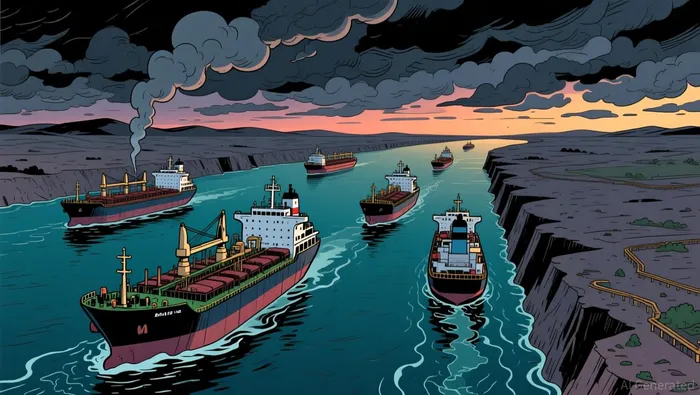
Traffic through the strait remains a small fraction of the pre-war level. Even so, that partial disruption is enough to keep oil markets tense. Hormuz still handles roughly a fifth of the world's oil and LNG supplies, so even a constrained bottleneck can keep a risk premium embedded in prices.
The disruption is physical, not just rhetorical
This is no longer only a headline-driven fear. The visible damage includes at least 17 merchant ships damaged, along with 7 abandoned, 2 captured, and 1 tugboat sunk. Investors do not need a full closure to react; they only need enough disruption in a critical chokepoint to make new strikes or diplomatic setbacks hit prices quickly.
Why another leg higher still looks possible
Prices are still reacting to the latest escalation: after fresh U.S. strikes in Iran, Brent rose above $96 a barrel and WTI reached $90.33. That leaves the market one bad headline away from another push higher. Diplomacy may still cap the move, but even a deal would mostly remove the premium going forward, not erase the damage already reflected in price.
Ceasefire-talk uncertainty is what is keeping Brent near $95
The clearest signal for traders is uncertainty over the status of ceasefire talks and the potential reopening of the Strait of Hormuz. That uncertainty is what has kept Brent pinned near $95. If diplomacy slips, the spike can resume quickly. If it advances, that risk premium can unwind just as quickly.
Duration, not just damage, is now the price driver
The chokepoint is real, but the market is no longer trading only the physical disruption. It is trading how long that disruption lasts.
Last week's Brent range shows what the market is pricing
Brent swung from $87.11 to $109.47 on conflicting signals about talks and the potential reopening of the strait. That kind of move looks less like ordinary headline noise and more like repricing of duration: whether the disruption stays contained, persists at reduced flow, or worsens toward something closer to a full shutdown. Even after a sharp reversal, oil still held most of its gains amid uncertainty over the status of ceasefire talks and the possible reopening of Hormuz.
What the talks actually involve
The negotiation stance helps explain why this remains a risk-pricing battle rather than a simple missile-counting exercise. Iran's latest offer includes demands for control of the Strait of Hormuz, compensation for war damage, lifting of sanctions, release of frozen assets and the withdrawal of U.S. troops from the area. That is a much broader set of demands than a simple ceasefire extension. The gap may still be negotiable, but the terms also suggest the market should not assume a quick fix.
Why crude and broader markets both care
Citi said investors are increasingly pricing out worst-case supply disruption scenarios, which helps explain why crude has not run straight to another extreme. But the bank also warned that uncertainty over the timing of any deal is keeping central banks alert to energy-driven inflation risks. That matters beyond crude: if the market treats the shock as temporary, equities can absorb it more easily; if it starts pricing a longer disruption, inflation and policy concerns widen the pressure.
The main watchpoints are straightforward:
- concrete progress in negotiations
- clearer tanker movements through the waterway
- statements that change the perceived timeline for flow restoration
Equities surged after the US and Iran agreed to a two-week ceasefire on expectations supplies could resume. That suggests the real fight is not just who hit whom last, but how quickly the market believes normalization is coming.
Deal terms matter more than threats
The debate has moved from abstract duration risk to actual deal terms. What matters now is not another round of threats, but whether any agreement creates workable transit conditions that let Hormuz function again. The market has already shown the score: when talks broke down before, oil jumped $3 a barrel. In recent sessions, Brent has swung as much as $6 on conflicting signals over a possible deal and the strait's reopening. The practical takeaway is simple: enforceable transit terms can move price faster than rhetoric.
The near-term test is whether flows actually improve
Sources said the U.S. and Iran reached an agreement to extend their ceasefire and lift restrictions on shipping, but Trump has yet to approve it and Iranian state media said it had not been finalised. That makes final approval the real go/no-go step. A ceasefire by itself may not be enough if shipping restrictions continue in practice.
Watch these triggers over the next few sessions:
- whether any agreement includes enforceable transit rules
- whether shipping restrictions are actually lifted
- whether reported progress holds or breaks down again
If an agreement delivers both enforceable transit terms and durable ceasefire progress, the premium can compress quickly. Without that, the risk premium is likely to stay.