KADOKAWA Says JFTC Warning Is Resolved-Oasis Says the Real Risk Is Natsuno at the June 24 AGM
The June 24 AGM, not the JFTC warning, is the immediate catalyst
With the JFTC subcontracting warning cited as part of the broader governance concerns, the near-term catalyst is no longer regulatory cleanup. It is the June 24, 2026 AGM, where shareholders will decide whether to reappoint CEO Takeshi Natsuno and how much accountability they want after years of weaker performance.
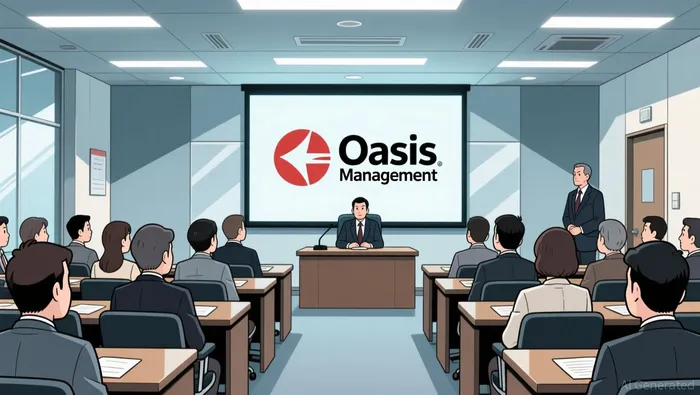
What the vote is really about
The bear case is straightforward. Since Natsuno took over, KADOKAWA's operating profit fell from JPY 13.6 billion to JPY 8.1 billion, earnings per share plummeted 89%, and ROE declined from 8.2% to 0.5%. That record gives Oasis's campaign real force, especially because the fund owning 13.76% of KADOKAWA is pressing for a leadership change.
The management case is narrower. It is not that performance has been strong, but that removing Natsuno now could weaken the continuity of ongoing reforms. That argument only works if shareholders believe continuity is more valuable than accountability after such a weak track record.
Why Oasis still sees a valuation reset ahead
Oasis's case is not mainly about multiple expansion. It is about a company that owns valuable IP but has not consistently turned that IP into durable, high-quality earnings. Oasis has held that view since its funds became shareholders in 2020. Its thesis is that as long as the assets exist but the economics keep slipping away, the stock will remain anchored by weak earnings power rather than recover on sentiment alone.
FromSoftware and external monetization remain a key pressure point
The most damaging point is not simply that KADOKAWA has famous franchises. It is that some of those franchises have not generated enough economic benefit inside the company. Oasis argues that FromSoftware's value was not fully captured, which helps explain why the market may keep discounting the portfolio instead of treating KADOKAWA like a consolidated IP engine.
Performance and execution quality have weakened
The same problem shows up across the broader business. Oasis has criticized a "quantity over quality" approach in the core content business, and the performance data support the view that execution has deteriorated rather than improved. For investors, that matters more than short-term noise: a company can endure a weak cycle if its asset base is being compounded, but it struggles when underutilized IP and softer margins make reported profit less dependable.
Cost discipline and capital allocation remain part of the debate
Oasis has also pressed for stronger cost discipline and better capital allocation for several years. That matters because poor allocation can hide how much value is sitting idle in the IP portfolio. If capital keeps going to lower-return uses while stronger monetization paths remain underfunded, the company looks less like a compounding business and more like a collection of assets earning below their potential.
Management's rebuttal is clear: shareholders should not punish leadership for dismantling reforms mid-cycle, especially when other units are still contributing. That argument can hold water, but it still depends on the market believing the revised plan will produce cleaner economics and better accountability.
What would actually move the stock before and after the AGM
The setup is now more focused. With the JFTC subcontracting warning no longer dominating the narrative, attention shifts to the June 24, 2026 AGM. Oasis is pushing to vote against the CEO's reappointment and to dismiss Natsuno, while management is still arguing that a change now would hurt the continuity of ongoing reforms.
What would support the activist case
The clearest bullish signal for Oasis is shareholder behavior that backs leadership change, or at least signals that the Board cannot rely on passive compliance. It would also help if the company started answering the accountability question more directly instead of leaning only on reform continuity.
What would weaken the setup
The simplest invalidation is straightforward: Natsuno is reappointed, and post-meeting results and governance do not improve in a meaningful way. That would suggest the status quo still has enough support despite years of underperformance and governance concerns.
A second complication would be if the company extends reform timelines again without offering a credible near-term checkpoint. Oasis has already highlighted that the five-year mid-term management plan was withdrawn, so another delay would likely be read as another reset rather than as a reason for patience.