Korea's 40% Wrong-Way ETF Spike Is a Portfolio Risk Story
KORU's wrong-way move matters because it can spread beyond retail trading
KORU's recent swing was not just a retail curiosity. The fund first fell more than 40% in the first week of March, then gained 15.69% in a single session. In a volatile regime, that kind of rebound can look manageable until you remember the product is only a daily 3x tracker, not a set-it-and-forget-it exposure tool.
The bigger issue is positioning. Leveraged products accounted for about 20% of ETF inflows into U.S.-listed Korea vehicles, and Bloomberg said more than 30% of KORU inflows came from Korea. That makes the flow less like independent noise and more like a concentrated source of demand that can unwind alongside stress in the underlying market.
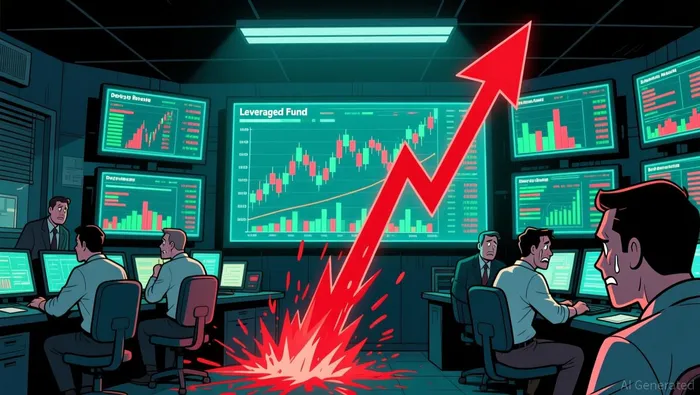
If Korean investors already hold 10% to 40% of some overseas leveraged ETF assets, then KORU deserves more than a niche classification. At scale, that kind of ownership can make correlation assumptions less reliable and increase the risk that leveraged positions unwind in a similar pattern.
Why the move went wrong: daily reset, decay, and concentrated demand
The core mechanical risk is simple. KORU is built to track three times the daily move of the MSCI Korea 25/50, not the multi-day move. In choppy markets, gains and losses do not cancel cleanly, so performance can drift sharply from three times the underlying index over more than one session.
Overseas leveraged ETFs are also effectively short-term borrowing-based investment. That means holding the fund exposes investors to persistent financing drag. If the base index moves sideways or falls unevenly, time itself can work against the product.
Korean demand turned a trading tool into a bigger market variable
That structure became more consequential because demand rose into weakness. In Korea's single-stock leveraged ETFs, 40-somethings were 28.9% of investors, while the average investor held about KRW 46.23 million. That helps explain why these products can attract buyers looking to accelerate exposure when volatility spikes.
When that kind of demand adds to leverage on the way down, the feedback loop changes. Buyers may be right if the reversal is fast, but if the bounce stalls, decay and financing costs keep pressing on the ETF even if the index decline is shallow. That is why the move looked so dislocated: mechanics, carry, and buyer behavior all amplified the same shock.
Why KORU fits a tactical sleeve, not a core allocation
Bulls often point to TQQQ's 1,780% return over 10 years as proof that 3x leverage can work over long periods. That outcome did happen, but it came from a sustained U.S. bull market. Leveraged ETFs still follow a daily target, and they fall 2x or 3x as well when markets turn. One powerful long-term winner does not prove the structure is safe for core portfolio allocation.
Overseas leveraged ETFs are effectively short-term borrowing-based investment, with estimated funding costs of about 12% a year for 3x leverage and 6% to 7% for 2x. If the underlying index goes nowhere, those costs still compound. That is why the cleaner distinction is tactical trading vehicle versus strategic allocation, not high-return product versus ordinary ETF.
KORU's own recent behavior illustrates the point. The fund fell more than 40% in the first week of March and then rose 15.69% in a day. That is the profile of a trading instrument, not a stable long-term compounding vehicle.
How to handle Korea leverage from here
The practical question is not whether Korea can rebound. It is whether you want to own a high-decay, high-correlation bet as part of a tactical sleeve.
What would justify a tactical entry
- Trigger: a sharp Korea sell-off followed by early signs that the underlying market is turning back up, not just ETF dip-buying.
- Time horizon: intraday to a few sessions, consistent with three times the daily move design.
- Sizing: small enough that another volatility spike does not damage portfolio risk-adjusted return, especially after a more than 40% in the first week of March drawdown.
What to monitor
- Whether leveraged products are still absorbing a large share of Korea-ETF demand.
- Whether Korean demand remains a dominant source of KORU flows.
- Whether financing drag is starting to matter even if the index stalls, consistent with overseas leveraged ETFs being short-term borrowing-based investment.
What would invalidate the setup
- The index chops sideways while leveraged ownership stays elevated.
- Volatility remains high without clear sector leadership.
- Korean holder concentration stays high enough to raise the risk of a correlated unwind, with some products showing 10% to 40% on some overseas leveraged ETF assets held by Korean investors.