The Correction Is Over, Be Bold Bullish Again, and Wednesday's Inflation Report Could Be the Entry Anyway
The market came under pressure last week, largely as we previously anticipated, due to excessively bullish positioning and stretched technical conditions. However, Monday's renewed strength in AI related stocks once again demonstrated the resilience of this bull market. With sentiment now more balanced and the fundamental drivers behind the rally remaining intact, it is worth reassessing the outlook. From technical conditions and sector leadership to the potential rate path, several factors continue to support the broader trend. More importantly, investors should consider what the smartest strategy may be from here.
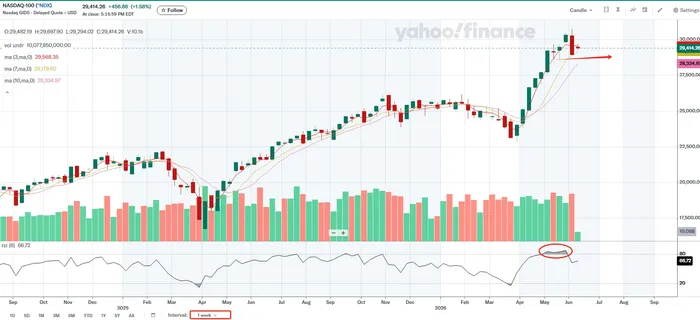
Following the rare wave of selling pressure last Friday, the Nasdaq 100's RSI has normalized across both daily and weekly timeframes. Prior to the decline, the technology heavy index maintained RSI readings above 80 for five consecutive weeks, reflecting unusually optimistic sentiment that was unlikely to persist indefinitely. History suggests that meaningful declines, such as corrections exceeding 20%, are typically triggered by unexpected events such as tariff, geopolitical conflicts, or economic shocks rather than simply overextended technical indicators. As those extreme readings cool down, the broader setup becomes healthier. In addition, Friday's decline brought the index back toward an important support zone, encouraging buyers to step in and accumulate positions.
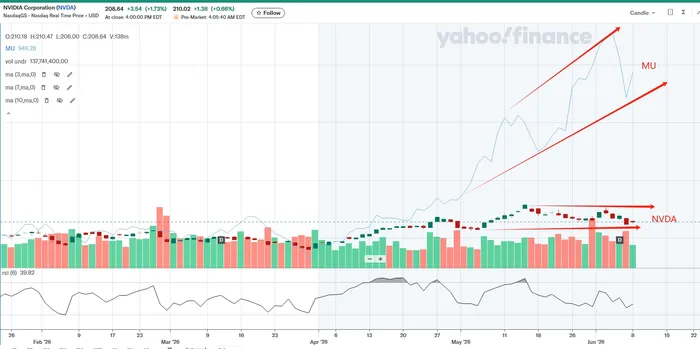
The primary engine behind the rally remains the semiconductor sector, as the long term AI narrative continues to strengthen. Demand for advanced chips and infrastructure remains elevated as hyperscalers and enterprises race to expand computing capacity. Intel, Micron, and Marvell led Monday's rebound as investors returned to favored AI names following the recent pullback. Notably, both Micron and Marvell remain firmly within a higher high and higher low structure, suggesting bullish momentum remains intact.
At the same time, Nvidia has lagged behind several peers despite unveiling its AI focused CPU initiative for the PC market. While some investors believe the company has missed part of the latest surge, the broader outlook remains compelling. Training workloads, inference demand, integration between GPUs and high bandwidth memory, and the rapid expansion of agentic AI across both enterprise and consumer applications continue to support the company's long term prospects. As a result, Nvidia still appears undervalued relative to its future opportunity. Should the stock begin catching up with the rest of the semiconductor complex, it could provide another meaningful catalyst for the entire sector and extend the market's advance.
Many market participants attributed Friday's selloff to stronger than expected nonfarm payroll data. Because job growth came in roughly double expectations, concerns emerged that the Fed could become more hawkish, triggering selling in rate sensitive growth stocks. However, that explanation appears somewhat superficial. A strong labor market reflects an economy that remains healthy, and it is difficult to justify a broad panic simply because economic conditions are better than expected. Furthermore, AI related companies are increasingly driven by fundamental developments, product launches, partnerships, and adoption trends rather than short term fluctuations in interest rate expectations. Even in the unlikely event of a rate increase, it would likely represent a one time adjustment rather than the beginning of a prolonged tightening cycle. Meanwhile, President Trump continues to influence the broader policy conversation through his support of a more accommodative Federal Reserve leadership structure. As time passes, investor focus will likely shift back toward the long term trajectory of AI adoption and monetization.
Attention is now turning toward Wednesday's inflation report. Some investors worry that previous oil related disruptions could push inflation above the 4% level and reignite fears of tighter monetary policy. However, there are reasons to remain calm. The primary contributor to recent inflation concerns has been energy prices, which have already moderated as optimism surrounding a potential U.S. Iran agreement has improved. Inflation data also tends to lag real time developments, meaning current readings may reflect conditions that are already beginning to fade. In addition, consensus expectations currently sit near 4.2%, representing a relatively high hurdle. If the actual figure meets expectations or comes in slightly below, markets could interpret the result positively because it would imply the inflationary impact was less severe than feared.
For that reason, any initial weakness following the report may ultimately create another buying opportunity rather than signal a lasting change in trend. Investors should remember that markets often react to expectations rather than absolute numbers.
In conclusion, last Friday's turbulence was primarily the result of excessive optimism and stretched positioning rather than genuine fears of a new rate hike cycle. The core investment thesis remains unchanged. AI adoption continues to accelerate, semiconductor demand remains robust, and Nvidia still possesses significant upside potential. With technical conditions now far healthier than they were a week ago, the broader AI trade appears ready to regain momentum. While many traders remain cautious ahead of Wednesday's inflation report, its long term importance may be overstated. Even if markets initially react negatively, any weakness could prove temporary and offer another attractive entry point. The correction appears to have done its job, sentiment has reset, and the path toward new highs remains intact.