US May Redirect Billions in Iranian Assets to Gulf States-And That Could Keep Energy Markets Jittery
Iranian assets now sit at the center of Gulf repair talks and Hormuz diplomacy
Washington is no longer discussing diplomacy in the abstract. Treasury has directed comprehensive estimates of repair costs for damage already sustained by Gulf allies, and is evaluating whether Iranian assets could be used to help finance those repairs. That makes frozen Iranian capital a live bargaining variable rather than a distant legal question.
The market cares because this could shape the terms under which energy flows are priced. Around a fifth of global oil and liquefied natural gas shipments normally move through the Strait of Hormuz, yet oil and liquefied natural gas flows are still severely constrained. If redirected Iranian funds help offset repair bills, one potential obstacle to a transit deal could ease. If not, the same leverage points remain in place. For now, the mechanism is still uncertain: it remains unclear which assets would be used, and Tehran has said its wealth is neither war spoils for Washington nor a payment fund for its allies.
That uncertainty is what keeps markets jittery. Any hint that frozen assets could be tied to both repair financing and improved transit could move oil pricing quickly. But the real market variable is not the asset claim by itself; it is whether the discussion changes actual flow conditions.
Hormuz, not reparations, is the real transmission channel for oil risk
The asset discussion matters mainly because it could alter transit conditions. What the market needs to price is not the politics of reparations, but whether oil and liquefied natural gas flows are still severely constrained through the Strait of Hormuz, a chokepoint that before the war carried around a fifth of global oil and liquefied natural gas shipments.
Why Hormuz matters more than the compensation debate
A blocked or contested strait does not just affect the region; it removes a large share of marginal supply from the global system. That is why throughput, insurance, and routing conditions matter more than the diplomatic framing around compensation.
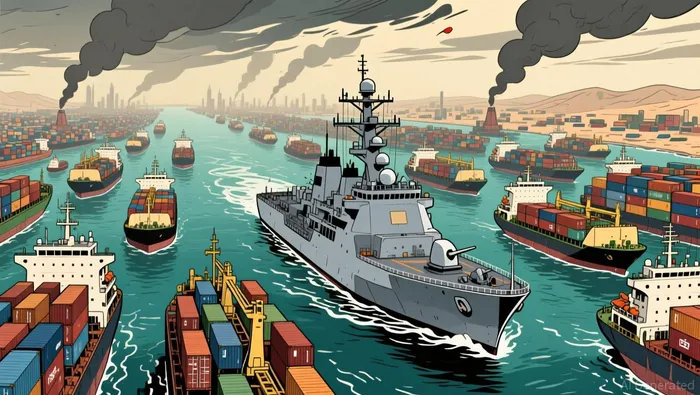
The latest signals keep that uncertainty alive. Iran says transit would occur under new conditions to be set by Iran and Oman, including a transit fee. Another Iranian official said ships could sail only if coordination with the Islamic Revolutionary Guard Corps was secured, with navigation coordinated with Iran and authorization from the Guards and the ports authority. That is not normal passage.
What would support an easing move
If frozen assets become part of a broader bargain, the price move may still be driven by reopening rather than by compensation alone. Reports link unfreezing Iranian funds to ensuring safe passage through the Strait of Hormuz. If that link hardens into workable transit terms, the risk premium could fall.
Watch for: - confirmation that traffic can use the established Traffic Separation Scheme - no new toll or condition regime for transit services - evidence that asset discussions are tied to transit, not just repair financing
What would keep the premium in place
Skeptics have a real point. Iran says the strait will be open, but only under new conditions and with authorization from the Guards and Iran's Ports and Maritime Organization. That leaves room for a formal opening that still preserves leverage. Add Iran's rejection of its wealth being treated as a payment fund for its allies, and the asset route may ease diplomacy without actually freeing flows.
If shipping conditions improve only on paper, energy markets are likely to stay cautious. If throughput actually expands, the premium is more likely to unwind.
What would validate an easing trade from Hormuz
The easing trade is only valid if the next moves improve actual Gulf transit, not just diplomatic optics.
The sequence that matters most
Over the next days to weeks, the order of concessions matters. The key link is whether unfreezing assets was directly linked to ensuring safe passage. If asset discussions move first while Hormuz terms stay vague, the market may price a diplomatic gain without a supply fix. If transit terms improve before asset details are settled, that is the stronger signal that the bottleneck is easing.
Bullish signposts
A real easing trade would need progress on several fronts: - clarity that shipping can use the established Traffic Separation Scheme lanes, not ad hoc routes - no broad new toll regime after Iran said the strait would open under new conditions ... including a transit fee - some proof that the U.S. is moving beyond the idea of whether Iranian assets could be used to help finance repairs and into a broader package tied to transit
What would invalidate it
Two developments would weaken the easing case. First, if flow conditions still require coordination with the Islamic Revolutionary Guard Corps and lanes set by Iran, that is managed access, not normalized shipping. Second, if Tehran keeps insisting its wealth is neither war spoils for Washington nor a payment fund for its allies while the U.S. still frames the discussion around compensate Gulf allies, the asset route may ease diplomacy without easing the market.
That keeps the bottleneck front and center. The strait has largely cut oil flows, and until that changes in practice, any easing trade remains conditional rather than confirmed.