Ripple and Bitso Put MXNB on XRPL-Now XRP Must Prove a $60B Corridor Matters
Ripple and Bitso are testing a live $60B US-Mexico settlement corridor on XRPL
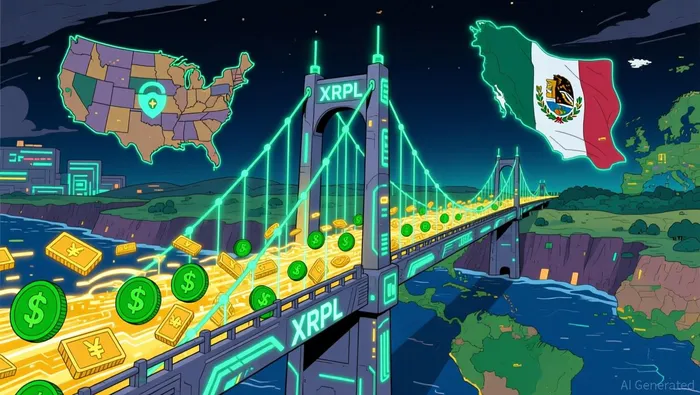
Ripple and Bitso have expanded their partnership to bring MXNB onto XRPL through XRPL's Permissioned DEX infrastructure. The move targets a corridor where approximately $60 billion flows annually through remittances and cross-border business payments.
This is a practical test of whether XRPL can support enterprise stablecoin settlement in a high-volume corridor. The key question is no longer whether there is demand for faster, more efficient payment rails in Latin America. It is whether this infrastructure can attract real transaction flow and, importantly, whether XRP becomes part of that settlement path.
Why the market is watching
The bull case is straightforward: if institutions displace even a portion of correspondent-banking flow with stablecoin-based settlement, XRPL looks more like live payments infrastructure and less like a future use case.
The bear case is just as clear: a more efficient rail does not automatically make XRP the bridge asset. If institutions can settle directly between stablecoins on XRPL, the network can become more useful without XRP playing a central role in the payment flow.
Network activity is already diverging from price
That tension is visible in recent network data. Earlier this year, XRP fell 27% in price, while Messari reported that average daily transactions on XRPL rose 35% quarter over quarter. Sentiment weakened, but usage metrics improved. The MXNB expansion adds a new test: whether growing activity on the ledger translates into a corridor that investors view as economically meaningful for XRP.
XRPL is starting to look like a multi-stablecoin settlement stack
This announcement matters because XRPL is becoming more than a single-asset payments chain. MXNB is set to be issued on XRPL and integrated into Ripple's Payments on Decentralized Exchange infrastructure, where it can work alongside RLUSD for USD/MXN liquidity.
That setup gives institutions a more structured environment for regulated on-chain settlement. Instead of treating stablecoins as an afterthought, Ripple is building toward a stack where multiple assets can coexist inside enterprise-focused infrastructure.
RLUSD and MXNB together widen the use case
The immediate mechanism is simple. MXNB provides peso liquidity on-chain, while RLUSD covers the dollar side of the flow. Both assets are being integrated into the same Payments on Decentralized Exchange infrastructure, which Ripple says is aimed at improving enterprise settlement between dollars and pesos.
This also builds on Ripple and Bitso's longer relationship in Latin America. Bitso now serves over 10 million users, giving the partnership a broader distribution base than a typical launch announcement.
RLUSD's positioning extends the signal beyond one corridor
RLUSD has also expanded beyond the US-Mexico use case. It has reached $1.7bn+ market cap in under a year and is now available in Türkiye through three local partners. Separately, Ripple has promoted RLUSD for payments, tokenization and collateral, while other reporting has described it as a regulated, bank-oversight-backed asset for multichain operations.
If that institutional posture continues to gain traction, XRPL could become more than a corridor rail. It could become a network where enterprises hold and move multiple regulated stablecoins in a compliance-forward environment.
The main risk: settlement may bypass XRP
The main bearish point remains unchanged. Stablecoin settlement on XRPL does not automatically mean XRP becomes the bridge asset. If payment providers can settle USD/MXN directly between RLUSD and MXNB, they may use the rail for speed and compliance without relying on XRP for liquidity or routing.
That is the key watchpoint. If usage grows but XRP remains peripheral to the actual settlement path, XRPL may still rerate as infrastructure while XRP's direct economic capture lags.
What would make this a stronger XRP thesis?
The trade now depends on one question: does this infrastructure pull XRP into the money path, or simply make XRPL more useful without it?
Bulls can point to XRPL's Permissioned DEX, Ripple's Payments on DEX infrastructure, and a corridor of $60B in US-Mexico cross-border settlements. If institutions begin routing USD/MXN liquidity through this stack in a way that involves XRP, the thesis strengthens materially.
Bears have the cleaner counterargument: if payment houses can settle directly between RLUSD and MXNB, they may prefer the rail while skipping XRP entirely.
What to watch next
Watch for evidence that XRP is being pulled into settlement rather than merely referenced alongside the infrastructure. If MXNB launches and activity rises, but stablecoin usage continues without meaningful XRP involvement, the product story may still be valid while the XRP-specific trade weakens.